Top 10 Sega Dreamcast Games
Top 10 Dreamcast Games: The Best Sega Dreamcast Games Ever!
Games every Dreamcast owner should play
The Dreamcast only lasted about two and a half years in the shops, which makes it all the more remarkable that it has one of the best libraries of any console. Sega threw everything it had at its last machine: arcade-perfect conversions, strange and colourful originals, and online play years before anyone else made it work on a console.
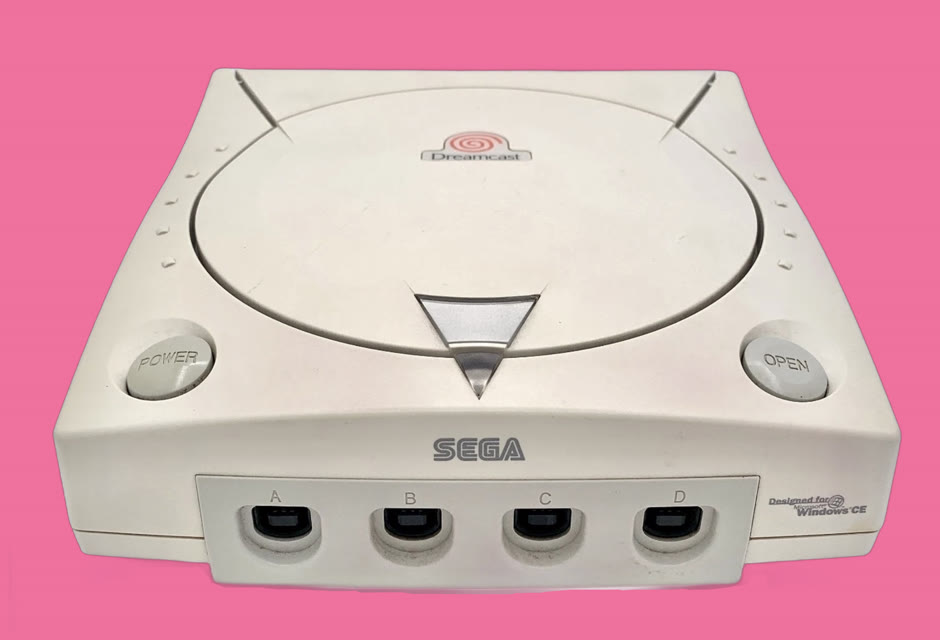
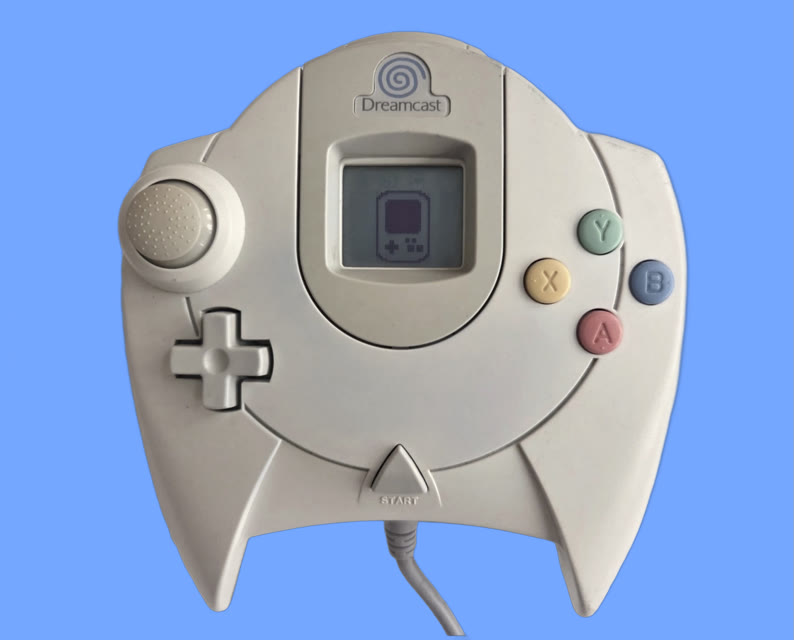
The Dreamcast and its controller, with a VMU memory card plugged in. The controller is the part everyone remembers.
I came to the Dreamcast late. I’d been a Sega fan since the Mega Drive days (Mega Drive over SNES, no question, as my Top 10 Mega Drive games will tell you), so once its official life was over I had to see what Sega’s last console was like. That was around 2005, when the second-hand market was very kind to latecomers, and I picked up most of the best games on this list for under a fiver each.
What struck me most was how many of its games were one-offs. Odd, original games like Fur Fighters, which today would turn up on Steam as indie titles, sat alongside arcade-perfect conversions like Crazy Taxi. Perfect, in that case, because the Dreamcast used pretty much the same hardware and software as Sega’s arcade machines: Crazy Taxi’s coin-op ran on Sega’s NAOMI board, which was more or less a Dreamcast with extra memory (more on that below).
I still have my Dreamcast, and it still gets played, which is more than can be said for some of the consoles that beat it. It sits alongside a Saturn and a Master System, so I’ve seen Sega’s console story from the 8-bit days to the end, and the Dreamcast is the one where everything finally came together, just as the money ran out.
Quick answer: the best Dreamcast games are Soulcalibur, Shenmue, Crazy Taxi, Jet Set Radio, Phantasy Star Online, Resident Evil Code: Veronica, Space Channel 5, Power Stone, ChuChu Rocket! and Quake III Arena. Between them they show off everything the Dreamcast did better than its rivals.
How I picked the top 10
Every Dreamcast fan has a different list, so here’s how I chose mine:
- What the critics said at the time. Each entry comes with a verdict from Dreamcast Monthly, one of the UK magazines that reviewed the machine’s games month by month.
- What only the Dreamcast could do. Arcade-perfect conversions, online play and Sega at its most inventive. A game that was just as good on the PlayStation didn’t get much credit.
- Whether it still plays well today. Some much-loved games have aged badly, and nostalgia only gets you so far.
- One of each. The Dreamcast had a lot of great fighting games, and a list with five of them would be a dull list, so each genre gets its best representative and the rest go in the near misses.
- My own collection. Seven of the ten are on my shelf, which helps when it comes to arguing for them.
Seung Mina against Ivy in Soulcalibur. Fighting games were the Dreamcast’s speciality, and this one is my number one.
Why the Dreamcast was ahead of its time
The Dreamcast launched in Japan in November 1998, in America on 9 September 1999 (9/9/99, which Sega’s marketing department enjoyed enormously), and in Europe on 14 October 1999 at £200. It was the first console with a modem built in as standard, a 33.6k one in Europe, which explains the European slogan “Up to 6 billion players”. It also explains a few large phone bills.
Inside were a Hitachi SH-4 processor and PowerVR2 graphics, the PowerVR chip coming from VideoLogic in Hertfordshire.
NAOMI: the Dreamcast’s arcade twin
The real secret of the Dreamcast’s arcade conversions was NAOMI, the arcade board Sega launched in 1998, the same year as the Dreamcast itself. NAOMI was built from the same parts (the same SH-4 processor, the same sound chip and a close cousin of the PowerVR graphics), but with twice the main and graphics memory, and games that came on ROM boards or GD-ROM discs loaded into memory rather than read from a disc as you played.
That meant bringing a NAOMI game home was mostly a matter of fitting it into less memory, so Crazy Taxi, Power Stone, Virtua Tennis, Dead or Alive 2 and Marvel vs. Capcom 2 all arrived on the Dreamcast looking almost exactly as they did in the arcade. For the first time, the arcade at home wasn’t just something written on the box.
NAOMI also outlived the console by years. New arcade games kept appearing on it until the late 2000s, and its descendants, NAOMI 2 and Sammy’s Atomiswave, kept the Dreamcast’s insides earning money in arcades long after Sega had stopped making the console. A few of those later arcade games even found their way back home: Treasure’s shooter Ikaruga started on NAOMI in 2001 and came out on the Dreamcast in Japan in 2002, by which time the machine was officially dead.
It didn’t last. Sony’s PlayStation 2 hype, Sega’s money troubles left over from the Saturn and widespread piracy took their toll, and in early 2001 Sega announced it was stopping production and leaving the hardware business altogether. Around 9 million Dreamcasts were sold. It’s still the console a lot of people mean when they say Sega’s best days.
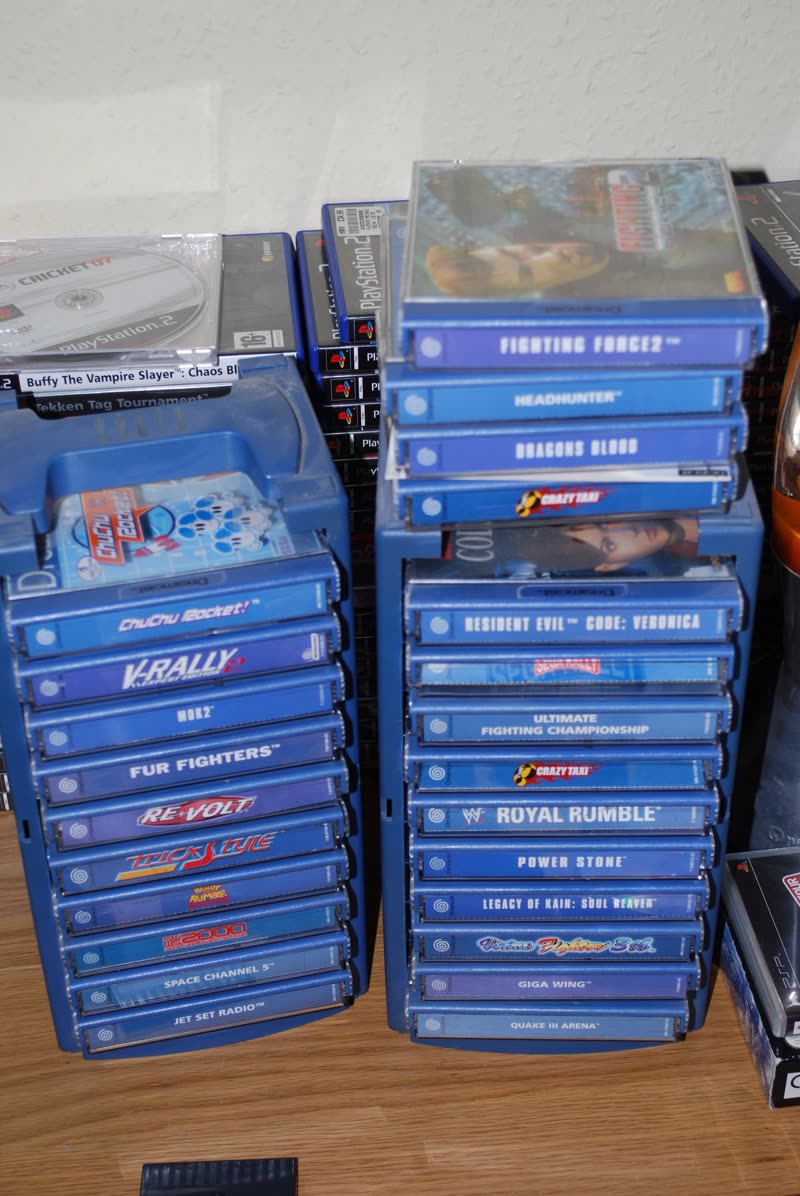
Here’s the countdown at a glance:
- Quake III Arena
- ChuChu Rocket!
- Power Stone
- Space Channel 5
- Resident Evil Code: Veronica
- Phantasy Star Online
- Jet Set Radio
- Crazy Taxi
- Shenmue
- Soulcalibur
So, in reverse order…
10 – Quake III Arena
id Software / Raster Productions – 2000
Quake III Arena was the biggest online game on the PC, and nobody expected a console with a fraction of a gaming PC’s memory to run it. The Dreamcast version not only ran it, it let you play online against people on PCs, at a time when consoles and PCs simply didn’t mix.
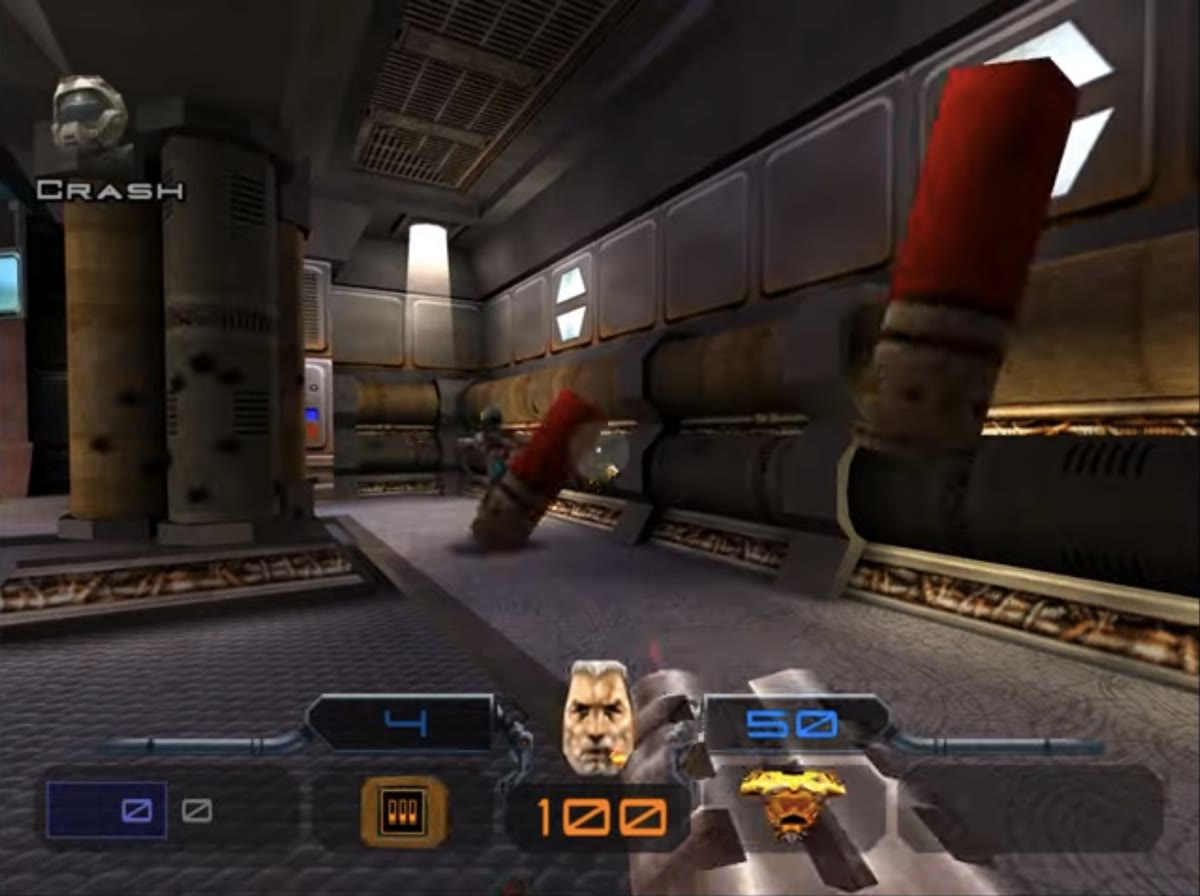 Rockets in the corridors of Quake III Arena
It’s a pure deathmatch game: no story to speak of, just arenas, rocket launchers and the railgun, with four-player split-screen if you could find three friends and a big enough telly. The Dreamcast supported a mouse and keyboard, which made a real difference to your chances against the PC crowd, who were never going to be beaten by someone using an analogue thumbstick.
“Quake III is the biggest online PC game to date and the DC version is no couch potato in comparison… God damn it – it’s good. Make sure you get a mouse and keyboard, though…”
Dreamcast Monthly, 2001
It’s at number 10 because it’s the game that best shows what that modem was for.
9 – ChuChu Rocket!
Sonic Team – 1999
The first online game most British Dreamcast owners played wasn’t a shooter or a racer, it was a puzzle game about mice and rockets. Sega gave ChuChu Rocket! away free to anyone who signed up to Dreamarena, its European online service, in the summer of 2000, and an awful lot of people did.
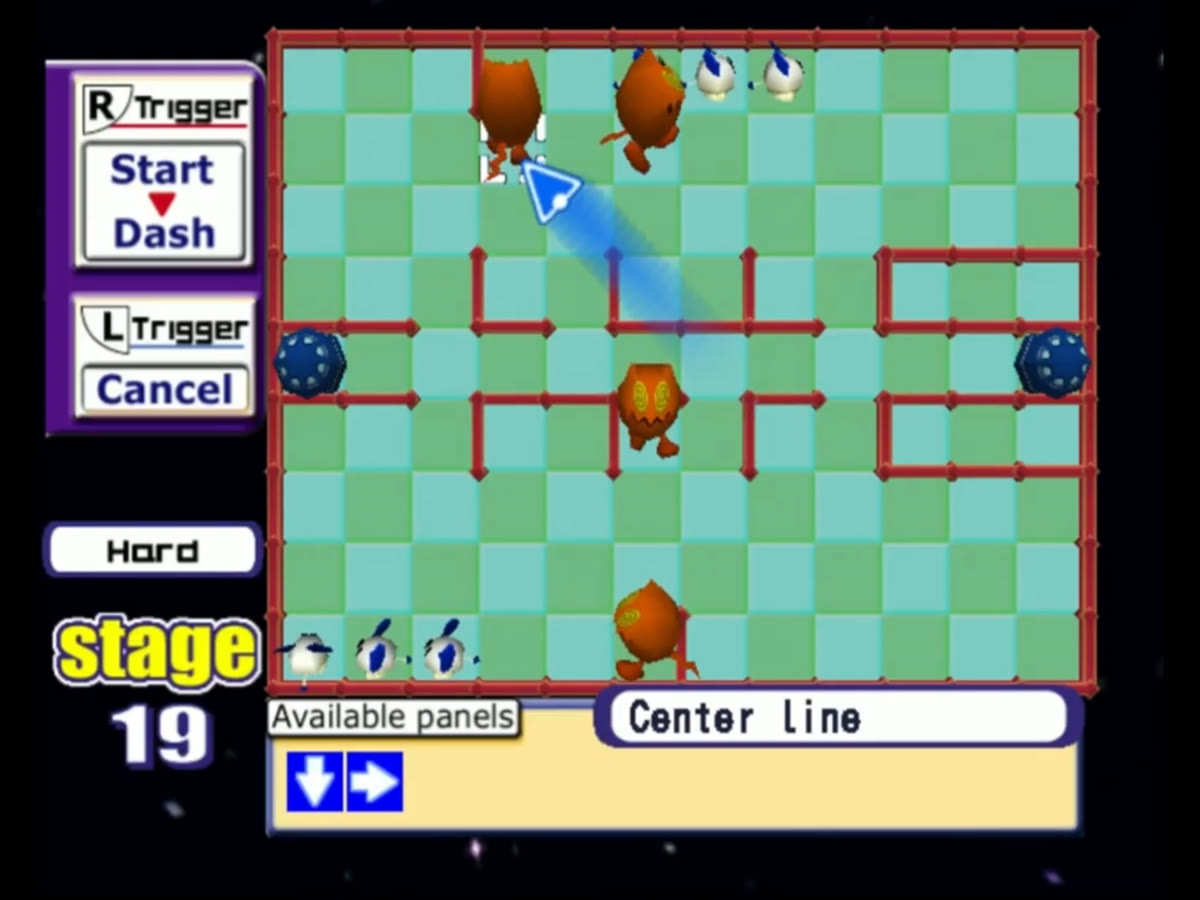 Puzzle mode, stage 19: two arrows, two rockets and some very determined cats
The idea is simple: up to four players place arrows on a grid to steer a stream of mice (the ChuChus) into their own rocket, while diverting the cats (the KapuKaps) into everyone else’s. It sounds gentle. It isn’t. With four people it descends into chaos within seconds, and the single-player puzzle mode is a proper brain-teaser in its own right.
“It might have pants graphics and an uninviting name… Goodbye early nights, hello huge phone bills!”
Dreamcast Monthly, 2001
Sonic Team made it on the side, apparently as a way of learning how to make online games. Phantasy Star Online, further up this list, was the result of that lesson.
8 – Power Stone
Capcom – 1999
Power Stone was a launch game in Europe and the first real sign that the Dreamcast was something special. Capcom took the one-on-one fighting game and set it free in fully 3D arenas, where you could pick up chairs, tables and anything else that wasn’t nailed down and throw them at your opponent.
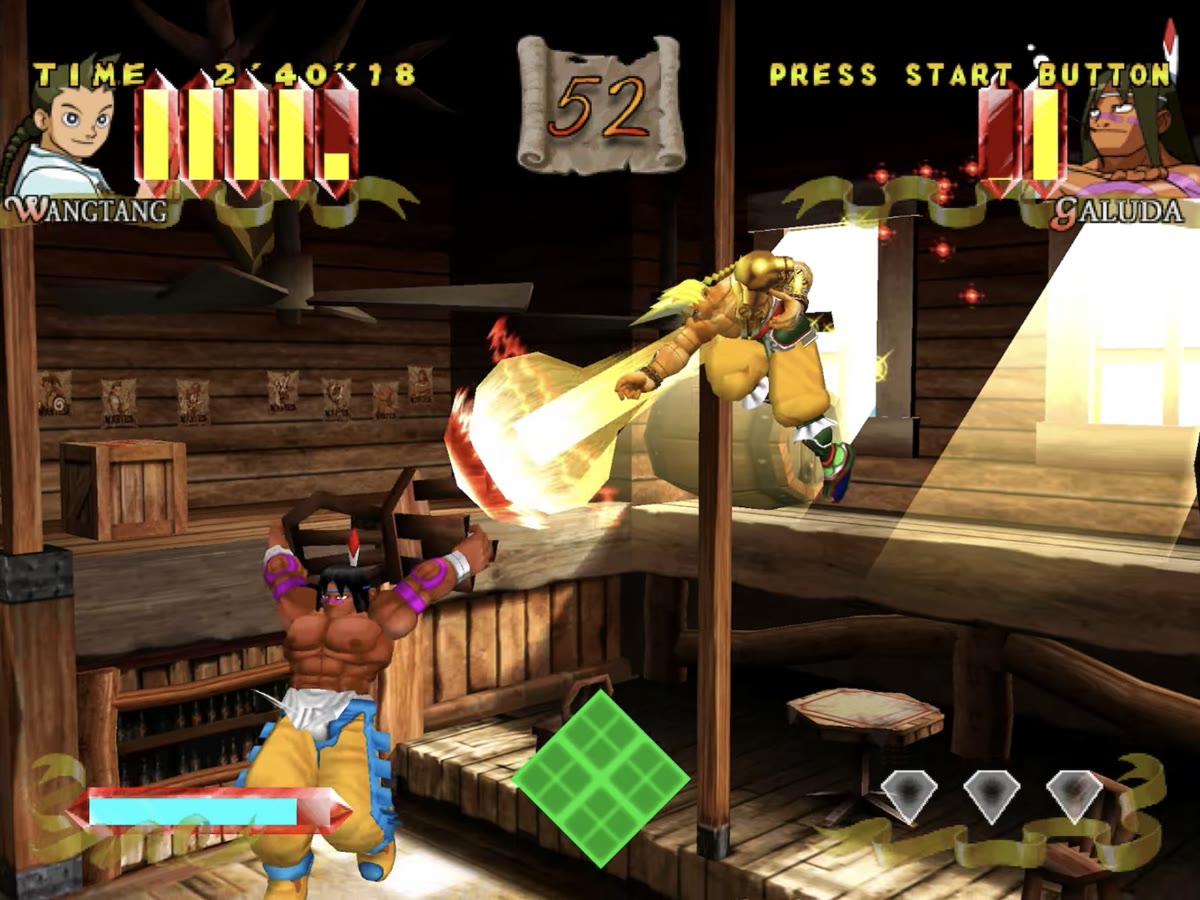 A powered-up Wang-Tang, and Galuda reaching for the furniture
Collect three of the coloured Power Stones scattered around the arena and your fighter transforms into a super-powered version of themselves for a few seconds of carnage. It’s fast, bright, cartoonish and very easy to pick up, which made it a great game for an evening with a friend who didn’t play fighting games.
“If you only get one Dreamcast game this Autumn (an all-too-likely prospect) get this baby, my friend…”
Dreamcast Monthly, issue 1, 1999
“All-too-likely” is about right, given that games cost £40 and most of us had just spent £200 on the console. Power Stone 2 added four-player battles and is arguably the better game, but the original is the one I own and the one that showed what the machine could do.
7 – Space Channel 5
United Game Artists – 1999
Only the Dreamcast could have had Space Channel 5. You play Ulala, a reporter for a space TV station, who saves hostages from dancing aliens by copying their moves: up, down, left, right and “chu” to shoot. It’s Simon Says set to a swinging 60s soundtrack, and it’s ridiculous in the best way.
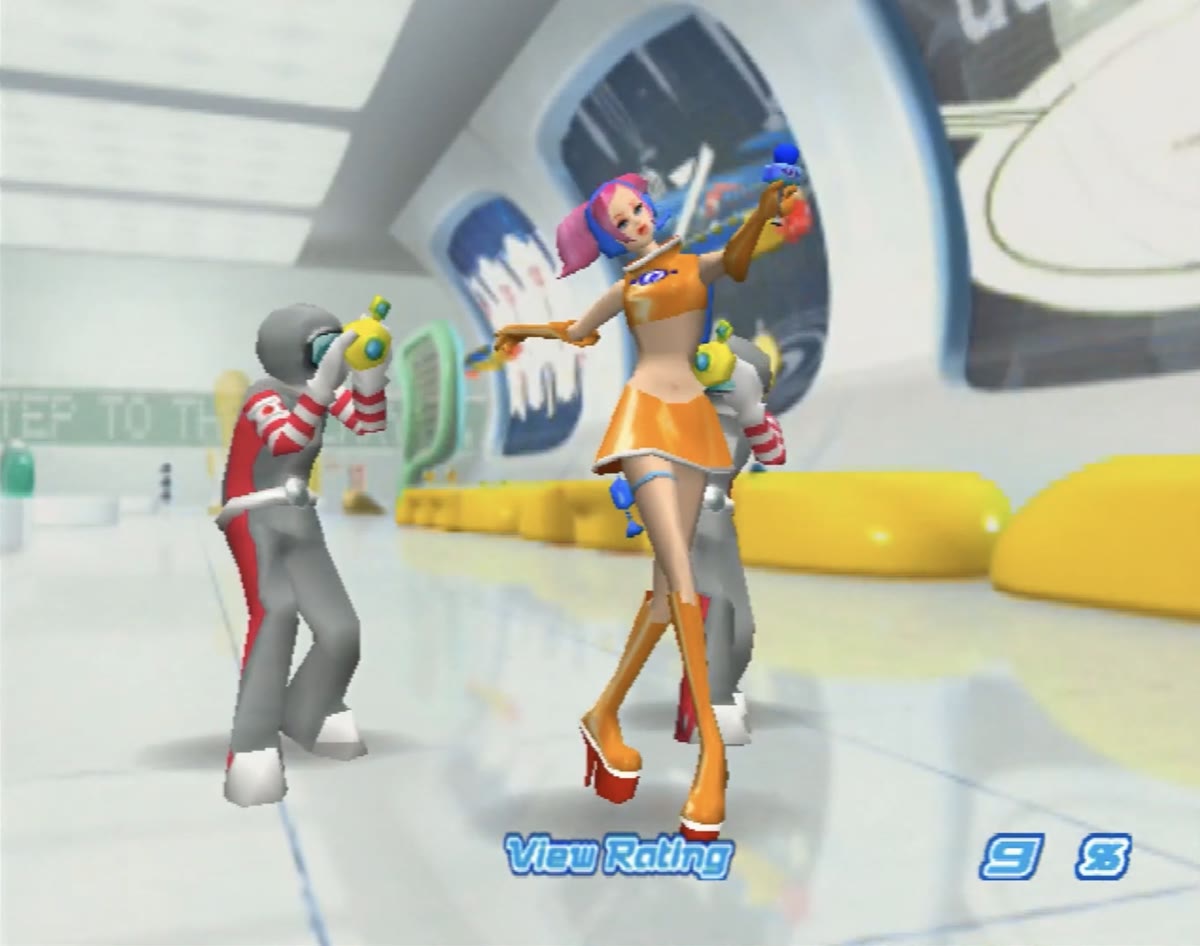 Ulala, reporting for Space Channel 5
It was produced by Tetsuya Mizuguchi, who went on to make Rez, and it’s all about style: the theme tune is a 1960s track called “Mexican Flyer” by Ken Woodman, and Michael Jackson turns up as “Space Michael” (really). It’s short, and you’ll finish it in an evening, but you’ll be humming it for a week.
“You might not be particularly keen on the dance/music genre, but SC5 could convert the Pope.”
Dreamcast Monthly, 2001
As far as I know, the Pope never commented.
6 – Resident Evil Code: Veronica
Capcom – 2000
Code: Veronica was the Resident Evil sequel the PlayStation couldn’t have, at least not at first. It moved the series from pre-drawn backgrounds to fully 3D environments, with the camera free to pan and swoop, and it was big enough to need two discs.
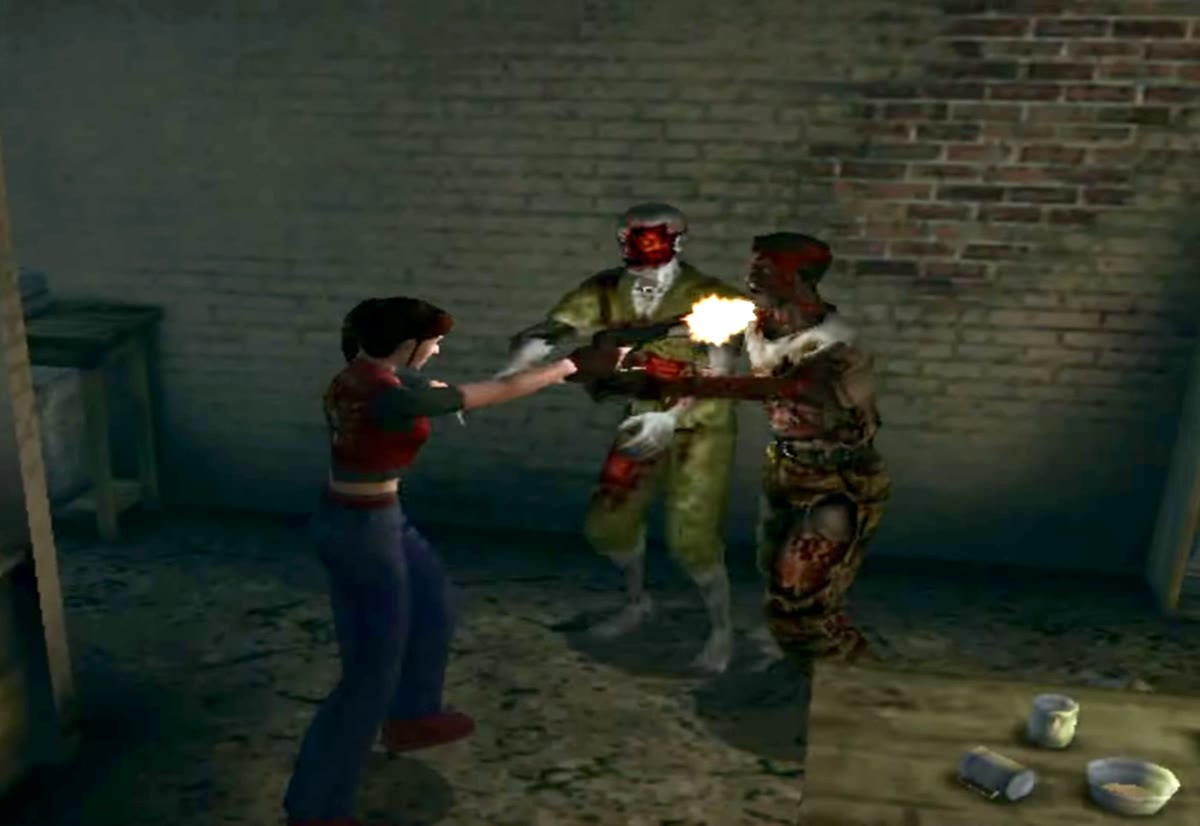 Claire Redfield, discovering that the island is not deserted
Claire Redfield, searching for her brother Chris, is captured and taken to a prison on Rockfort Island, which inevitably turns out to be crawling with Umbrella’s handiwork. The story eventually moves to Antarctica, as these things do. The controls are still the old “tank” style, which hasn’t aged well, but the atmosphere and the scares are as good as the series got before Resident Evil 4 changed everything.
“If you love jumping out of your seat with fright… you can’t go far wrong with Code: Veronica… This is easily the best Resident Evil; anyone for another?”
Dreamcast Monthly, 2001
It was later re-released on the PlayStation 2 as Code: Veronica X, which rather took the shine off its exclusivity, but it started life on the Dreamcast and it belongs on this list.
5 – Phantasy Star Online
Sonic Team – 2000
Phantasy Star Online was the first online role-playing game on a console, and for a lot of people it was the first time they’d played a game with strangers from another country. Up to four players teamed up to explore the planet Ragol, fighting monsters and sharing loot, all over a dial-up modem.
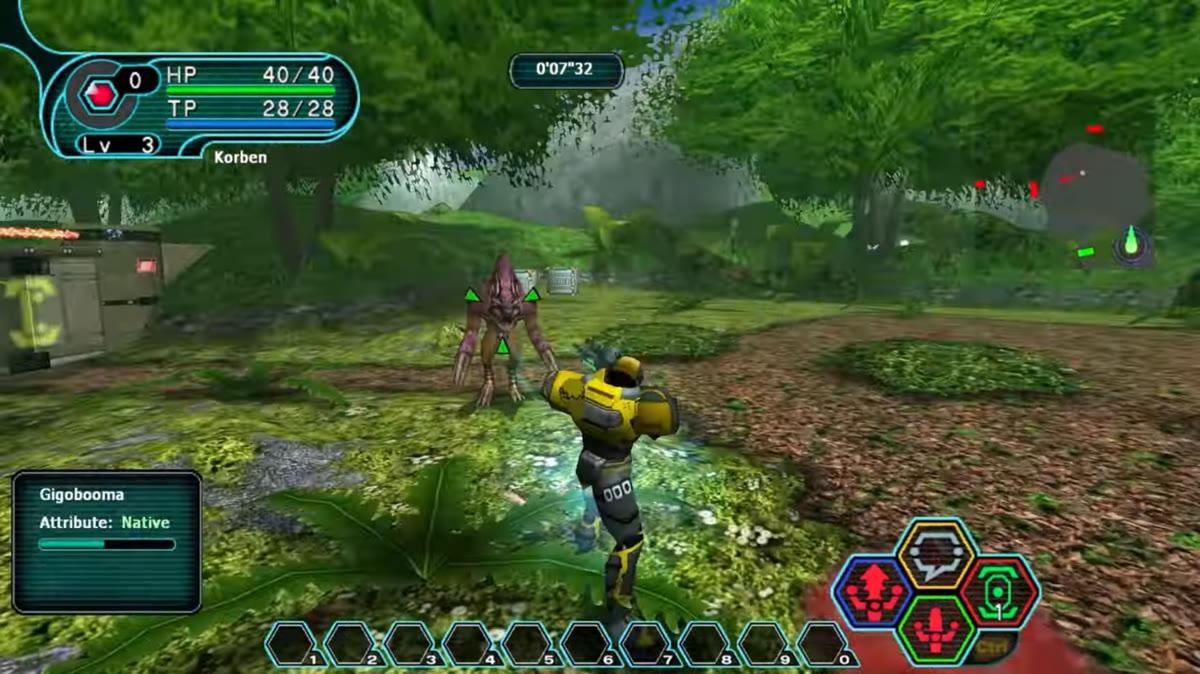 Exploring the forest on Ragol, with a Gigobooma for company
The clever part was how it got round the language barrier. Sonic Team built in a “word select” system that translated set phrases between English, Japanese, French, German and Spanish, plus symbol chat for drawing little faces, so you could play with someone in Tokyo without either of you speaking the other’s language. It worked surprisingly well, even if most conversations didn’t get much further than “Hello”, “Thank you” and “Help!”.
“…arguably one of the most daring online gaming projects on any format.”
Dreamcast Monthly, previewing it in early 2001
Sega’s own servers are long gone, but fans have kept the game alive on their own servers, more than 25 years later.
4 – Jet Set Radio
Smilebit – 2000
Jet Set Radio looked like nothing else when it came out, and it still looks like nothing else now. It was one of the very first games with “cel-shaded” graphics, which made its 3D world look like a hand-drawn cartoon.
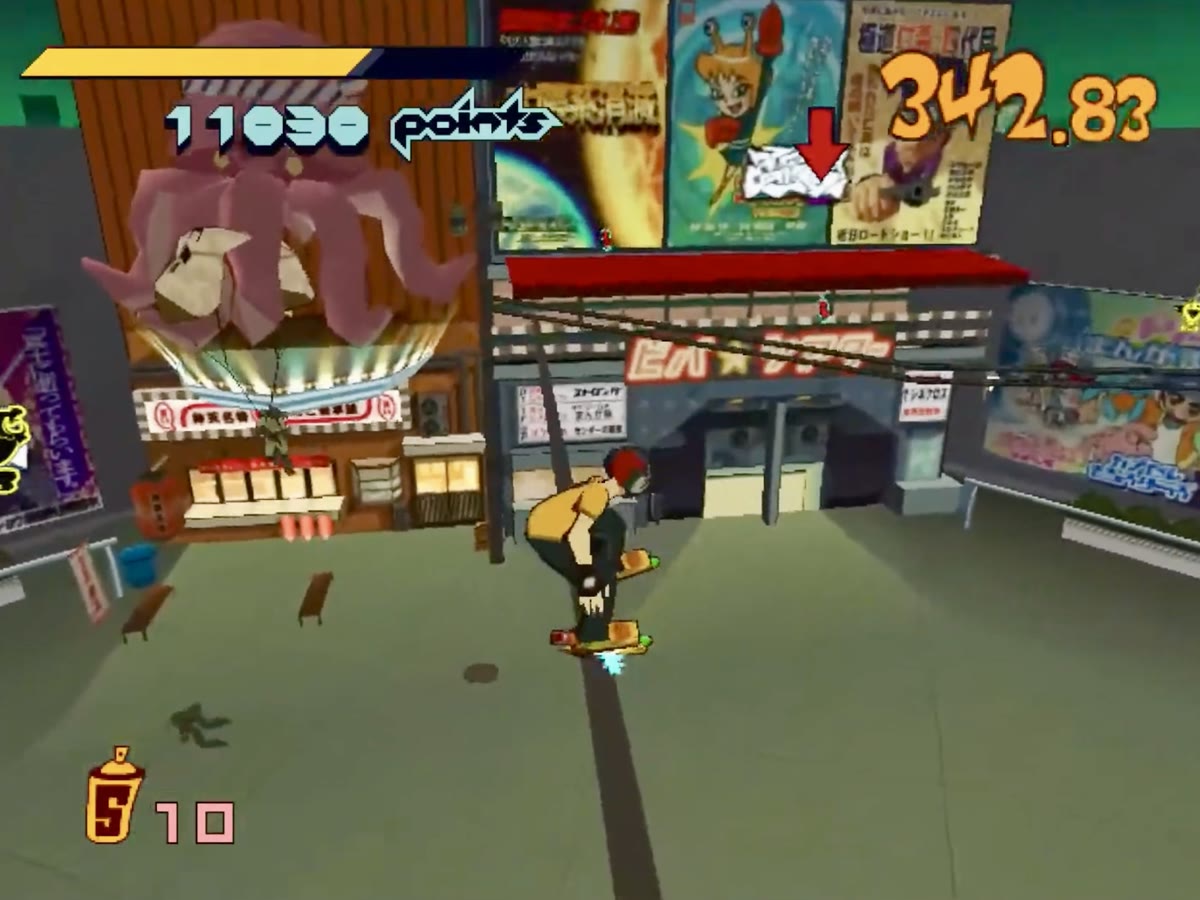 Beat heading for the next tag, under a giant octopus
You play a gang of inline skaters in Tokyo-to, spraying graffiti over rival gangs’ tags while the police, led by the splendidly unhinged Captain Onishima, try to stop you with everything up to and including helicopters. The soundtrack, much of it by Hideki Naganuma, is as much a part of the game as the graphics, introduced by the pirate DJ Professor K.
“Jet Set Radio is an all-out assault on your visual senses… often as enjoyable to watch as it is to play. It’s not perfect, however, with annoying controls and an overall lack of variety. It still kicks ass, though.”
Dreamcast Monthly, 2001
The magazine had a point about the controls, which take some getting used to, but no other game on this list has influenced quite so many others. In America it was called Jet Grind Radio, which nobody has ever been able to explain.
3 – Crazy Taxi
Hitmaker – 2000
I’ve written a full review of Crazy Taxi, so I’ll keep this short: pick up a fare, drive like a lunatic across a city that looks a lot like San Francisco, and get paid extra for near-misses and jumps. Passengers in this world reward reckless driving, which tells you everything about Crazy Taxi’s view of road safety.
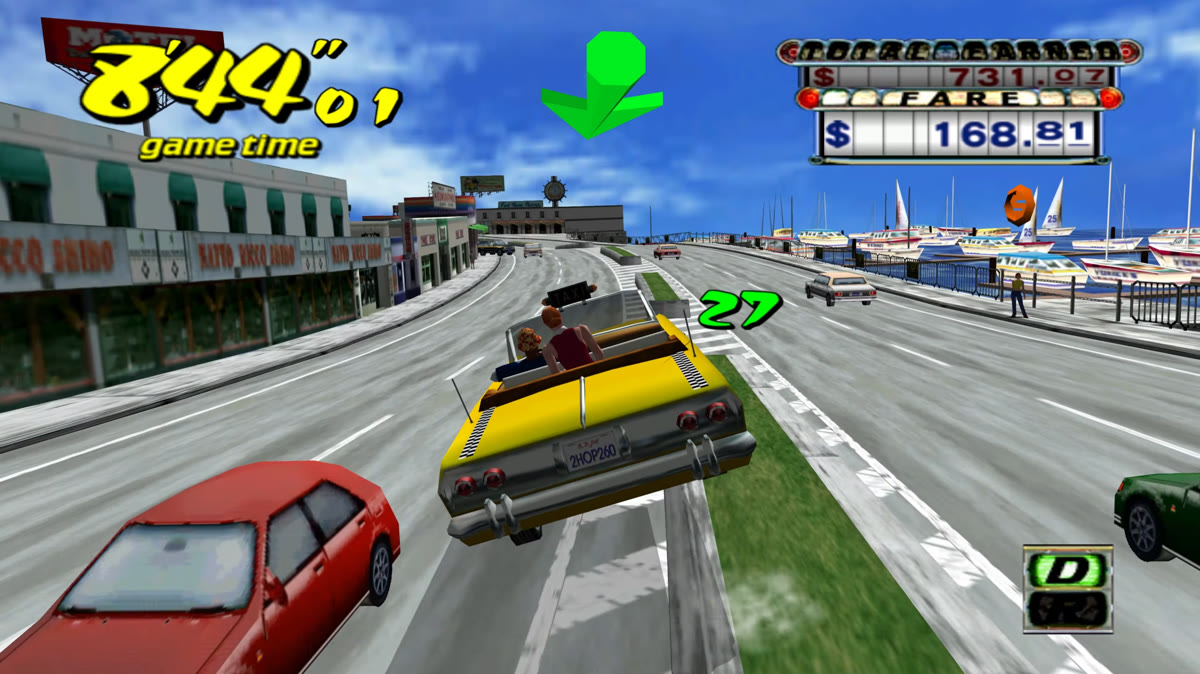 Four wheels off the ground and the meter running
It started life in the arcade on Sega’s NAOMI board, so the Dreamcast version was as good as the coin-op (it was very nearly the same machine), and it added a second city and a set of Crazy Box challenges for good measure. The Offspring and Bad Religion soundtrack and the real-world shops (drop-offs at KFC and Pizza Hut) sealed it.
“Barring Soul Calibur, Crazy Taxi is very possibly the best arcade to DC conversion we’ve seen.”
Dreamcast Monthly, 2001
I still play it on my Dreamcast today, always under Arcade Rules, where the clock ticks down and you have to earn more time, just as it would in the arcade.
2 – Shenmue
Sega AM2 – 1999
Shenmue was Yu Suzuki’s attempt to make the most detailed game world ever built, and it very nearly worked. Suzuki, the man behind OutRun, Hang-On and Space Harrier, recreated a corner of Yokosuka in 1986 in extraordinary detail, with people who went about their own daily routines, shops that opened and closed, and weather based on real records from the time.
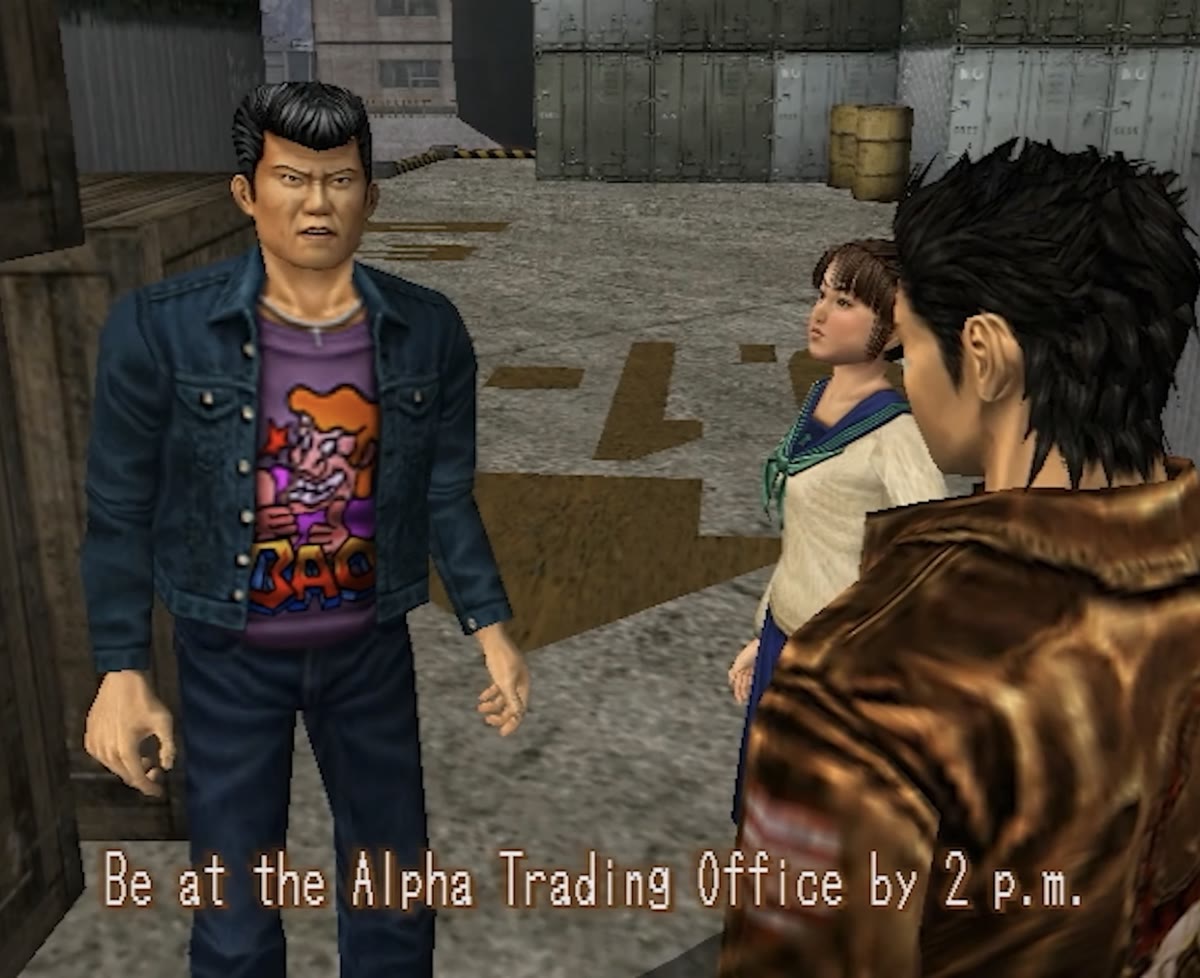 Ryo at the harbour, being told where to be and when. Shenmue has a lot of this
You play Ryo Hazuki, a teenager out to avenge his father’s murder, which in practice means a lot of asking strangers if they’ve seen any sailors, playing Space Harrier and Hang-On in the local arcade, collecting capsule toys and (in one memorable stretch) driving a forklift truck in the docks. It also popularised “quick time events”, where you have to press the button shown on screen at exactly the right moment.
Reports put the cost at around $70 million, although Suzuki later said it was closer to $47 million, including marketing. Either way, it was the most expensive game ever made at the time, and it never made its money back.
“Shenmue is a true epic that will have you hunched in front of your TV for an age. It may have flaws – dull periods, some dodgy translations – but Shenmue offers something unique and beautiful. The future has arrived.”
Greg Howson, Dreamcast Monthly, issue 16, Christmas 2000
The review’s “alternative” box, where the magazine usually suggested a similar game, simply said “Real Life: Go outside and head to the shops. Talk to people.” Which is, to be fair, what Shenmue is about. Fans waited 18 years for the story to continue, until a record-breaking Kickstarter finally funded Shenmue III in 2019.
1 – Soulcalibur
Namco – 1999
Soulcalibur is the best game on the Dreamcast, and for a while it was arguably the best-looking game on any console. It was an arcade conversion that was better than the arcade original, which almost never happened, with sharper graphics and a whole raft of extra modes.
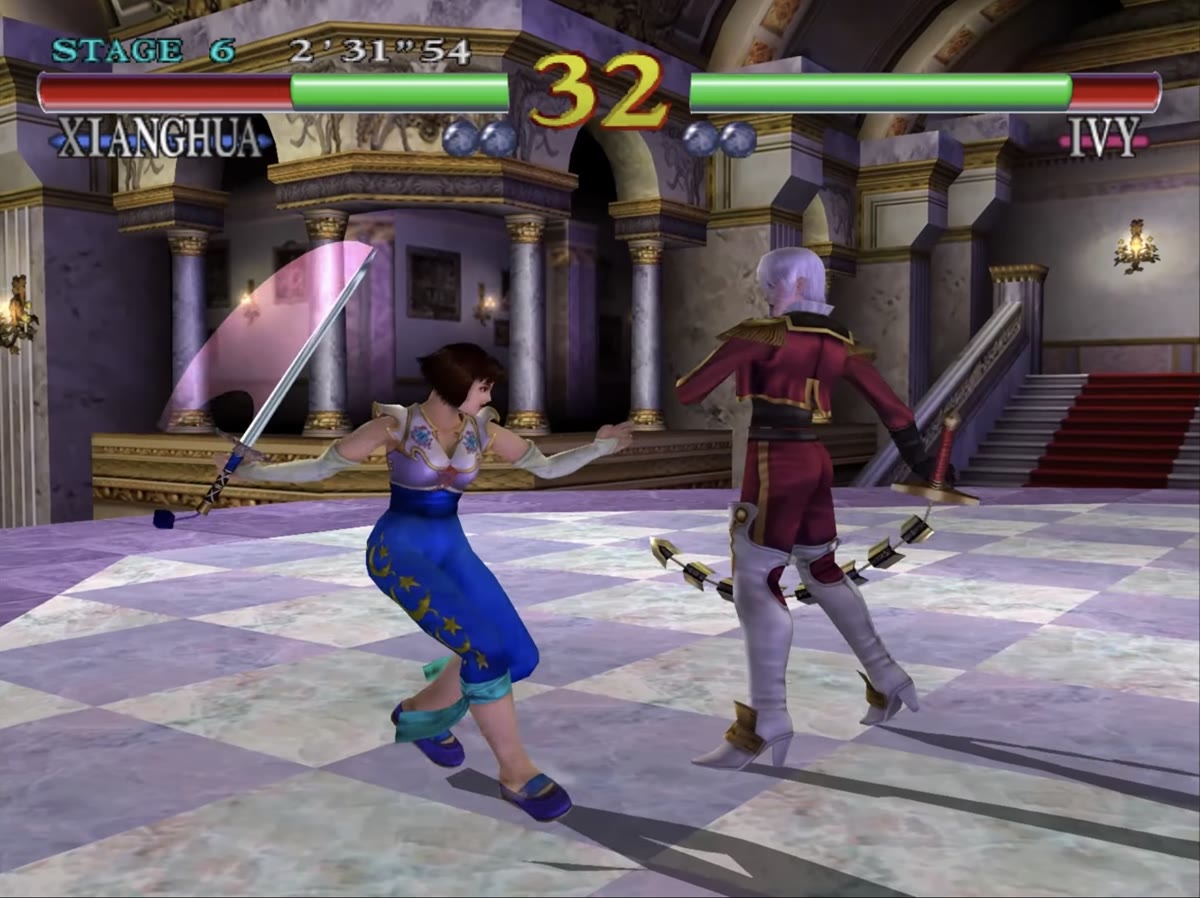 Xianghua against Ivy
It’s a weapons-based fighting game, with a cast that includes the samurai Mitsurugi, the whip-sword-wielding Ivy and the contortionist Voldo, who is best not thought about too closely. What set it apart was the “8 Way Run”, letting you move freely around the arena rather than just backwards and forwards, and controls that were easy to learn but deep enough to keep you playing for years. Japan’s Famitsu magazine gave it 40 out of 40, only the second game ever to get a perfect score, after Zelda: Ocarina of Time.
“Regardless of whether we’re talking graphics, gameplay, control or even sound, it’s perfectly executed.”
Dreamcast Monthly, issue 3, 1999
The same magazine’s buyer’s guide was less measured: “Probably the best beat-’em-up in the World. No, just kidding, this IS the best beat-’em-up in the World, and by quite some distance.” I wouldn’t go quite that far, but it’s my number one.
The best Dreamcast games that didn’t make the top 10
Some of these hurt to leave out, and on another day a couple of them would be in:
- Virtua Tennis – the best tennis game of its time, and a four-player favourite
- Sega Rally 2 – the arcade classic, though the Dreamcast version had some frame rate problems
- Metropolis Street Racer – Bizarre Creations’ racer set in London, Tokyo and San Francisco, and the forerunner of Project Gotham Racing
- Skies of Arcadia – a sky-pirate role-playing game that’s a favourite of many fans
- Sonic Adventure – Sonic’s first proper 3D game was a showpiece at launch, but the camera hasn’t aged well
- Power Stone 2 – four players and even more mayhem than the original
- Rez – Tetsuya Mizuguchi’s hypnotic music shooter
- Fur Fighters – Bizarre Creations’ shooter starring heavily armed cuddly animals, and exactly the sort of odd one-off the Dreamcast was full of
- Re-Volt – radio-controlled car racing, and one of several on my shelf that nearly made it
If you’re interested in Sega’s earlier days, see my Top 10 Mega Drive games, and for the arcade side of the story, my review of OutRun.
Playing and collecting Dreamcast games today
On an original Dreamcast
That’s how I still play mine. Dreamcasts are still easy to find second-hand, and most games will output a VGA picture, so a VGA box (Sega made its own) or a modern HDMI adaptor gives a far sharper image than the composite lead it came with. Many PAL games also offer a 60Hz mode, which is worth switching on: the games run at full speed and without the black borders.
The weak spot is the disc drive. Dreamcast GD-ROM drives are now more than 25 years old, and a tired one gives itself away with long loading times and discs it won’t recognise. Plenty of owners replace it with an optical drive emulator such as the GDEMU, which loads games from an SD card instead, and has the side effect of making a famously noisy console almost silent.
Collecting
When I started collecting around 2005, most of the best Dreamcast games cost under a fiver. A few still do, but prices have split into three fairly clear tiers. Here’s roughly what complete PAL copies (boxed, with the manual) were going for in late 2026:
| Tier | Typical price | Examples |
|---|---|---|
| Common games | £5–£15 | ChuChu Rocket! (about £6), Metropolis Street Racer (£11–£12) |
| Popular classics and cult hits | £20–£50 | Sonic Adventure (£26–£30), Resident Evil Code: Veronica (about £35) |
| Rare and late releases | £100–£500+ | Rez (about £135), Project Justice (about £170), Cannon Spike (about £425) |
Prices from eBay sold listings, CeX and PriceCharting in late 2026; US dollar prices converted to pounds.
The common tier is where launch games, sports titles and puzzle games live, and it’s still a lovely place to start a collection. The top tier is mostly late releases and arcade fighters, printed in small numbers just as the console was being discontinued, which is exactly why they’re expensive now. And then there are the oddities: CeX was asking £42 for a boxed copy of 102 Dalmatians: Puppies to the Rescue, which is more than Code: Veronica. I can’t explain that, and I’m not sure anyone can.
As with any boxed game, condition makes a big difference, so check the case, the manual and the disc before you pay a collector’s price.
Playing online again
Sega’s servers closed years ago, but fans have brought Dreamcast online play back. A DreamPi, a Raspberry Pi set up to pretend to be a phone line, plugs into the Dreamcast’s modem and connects it to community-run servers, and dozens of games work online again, including Phantasy Star Online and Quake III Arena. There’s something very satisfying about hearing that dial-up screech in the 2020s, especially when nobody is paying for the call.
On modern systems
Several of the games here have been re-released: Crazy Taxi and Jet Set Radio on PC and modern consoles, Shenmue I & II as a remastered pair in 2018, and Resident Evil Code: Veronica X on later PlayStations. For everything else, the free Flycast emulator runs most Dreamcast games very well, and can run NAOMI arcade games too, which says something about how close the two machines were.
Frequently Asked Questions
What is the best Dreamcast game of all time?
Soulcalibur tops most lists, including mine, with Shenmue, Jet Set Radio, Crazy Taxi and Phantasy Star Online close behind. Soulcalibur was rated as one of the best games ever made when it came out, and it still plays brilliantly.
How many games were released for the Dreamcast?
Around 600 games were released across all regions, although many never left Japan. The Dreamcast also has an active homebrew scene, and new games are still being released on disc.
Why did the Dreamcast fail?
It wasn’t the games. Sega was short of money after the Saturn, Sony’s PlayStation 2 hype persuaded many people to wait, big publishers such as EA never supported it, and its discs were easy to copy. Sega stopped making the console in 2001, after around 9 million had been sold, and became a software publisher.
Could you play Dreamcast games online in the UK?
Yes. Every European Dreamcast had a 33.6k modem and came with free access to Sega’s Dreamarena service, though you paid for the phone call. ChuChu Rocket!, Phantasy Star Online and Quake III Arena were among the games you could play online, and fans have since revived online play for several of them.
What was the VMU?
The Visual Memory Unit was the Dreamcast’s memory card. It plugged into the controller, and it had its own little screen, buttons and battery, so it could show extra information during a game or play simple mini-games on its own.
What was Sega NAOMI?
NAOMI was Sega’s arcade board from 1998, built from the same parts as the Dreamcast but with more memory. Because the two were so similar, NAOMI arcade games such as Crazy Taxi, Power Stone and Virtua Tennis could be converted to the Dreamcast almost unchanged. NAOMI arcade games kept being released until the late 2000s, long after the Dreamcast itself was discontinued.
What’s the difference between Jet Set Radio and Jet Grind Radio?
They’re the same game. It was called Jet Set Radio in Japan and Europe, and Jet Grind Radio in America.
Can you still play Dreamcast games today?
Yes. Original consoles are still easy to find, a VGA or HDMI adaptor makes them look much sharper on a modern TV, and a DreamPi even gets them back online. Several games on this list have been re-released, including Crazy Taxi, Jet Set Radio and Shenmue I & II, and the Flycast emulator runs most of the rest. There’s more in the “Playing and collecting” section above.
Sources
Quotes from elsewhere, for anyone who wants to read more:
- Dreamcast Monthly (Quay Publishing), issue 1, 1999, issue 3, 1999, issue 16, Christmas 2000 and issue 17, 2001, Internet Archive
More like this
Top 10 Atari 2600 Games
The best classic Atari games, from iconic Asteroids and Pitfall to Adventure and River Raid: my top 10 Atari 2600 games, the best of the rest and how to play them today.

Crazy Taxi for Sega Dreamcast
Crazy Taxi on the Sega Dreamcast: the 1999 arcade hit where you race fares across a San Francisco-style city and earn more for driving recklessly.
Comments