OutRun Arcade Game by Sega (1986)
By RolyRetro · · Arcade Games
Most racing games are about winning. OutRun was about something else entirely: a red Ferrari with the roof down, a blonde in the passenger seat, a choice of three songs on the radio and a long road along the coast. You were still racing the clock, but the clock felt like a minor inconvenience on what was otherwise a very nice day out.
That’s because OutRun started life as a road trip. In 1986 Yu Suzuki, Sega’s star designer, spent two weeks driving round Europe in a hired BMW, taking photos and filming the scenery, and came back with the game that would top the arcade charts in Japan, America and Britain the following year.
This is the story of that trip: the Ferrari Suzuki found outside a casino in Monaco (and didn’t ask permission to use), the car radio that ended up giving its name to a style of music, the moving cabinets that drew the queues and the home versions that never quite kept up. It’s also a game I first played on Southend sea front and now have standing in my own collection, so I’ll get to that too.
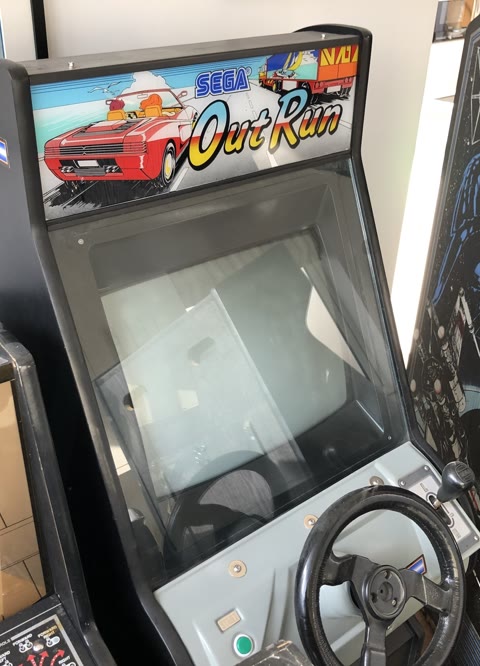
My OutRun cabinet, and Coconut Beach, the first stage, played in arcade emulation. Turn the sound on for Magical Sound Shower.
The Road Trip Behind OutRun
A film, a dream car and a change of country
Suzuki was a fan of The Cannonball Run, the 1981 Burt Reynolds film about an illegal race across America, and that was the starting point. He disliked racing games where your car exploded at the slightest touch, and wanted players to feel “superior”: you were the one in the best car on the road, with the best company and the best soundtrack.
His first plan was to set the game across the United States, and he asked to go and scout locations. Sega’s president, Hayao Nakayama, apparently thought America was too unsafe and suggested Europe instead. Suzuki didn’t need much persuading, having decided the US was too “large and empty” anyway.
Two weeks in a BMW 520
So off he went, in a hired BMW 520, starting in Frankfurt and taking in Monaco, the French Riviera, the Swiss Alps, Florence, Rome and Milan. Cameras were taped to the car to film the road, and he took photos of everything. It’s quite possibly the best research trip anyone at Sega has ever been sent on.
It was in Monaco, outside the casino, that he found the car. Suzuki saw a red Ferrari Testarossa parked there and decided that was what the player would drive, as a convertible, naturally, so you could see your passenger’s hair blowing in the wind. Back in Japan the team tracked down a Testarossa to photograph from every angle and recorded the sound of its engine.
There was just one snag: Ferrari never sold a convertible Testarossa. It only ever came as a coupé, with a fixed roof, and the one official open-top car was a one-off built for Fiat’s boss, Gianni Agnelli. Whatever Suzuki saw in Monaco, OutRun’s roofless Testarossa was a car you could drive in the arcade but not buy in a showroom, which is probably the most Ferrari thing about it.
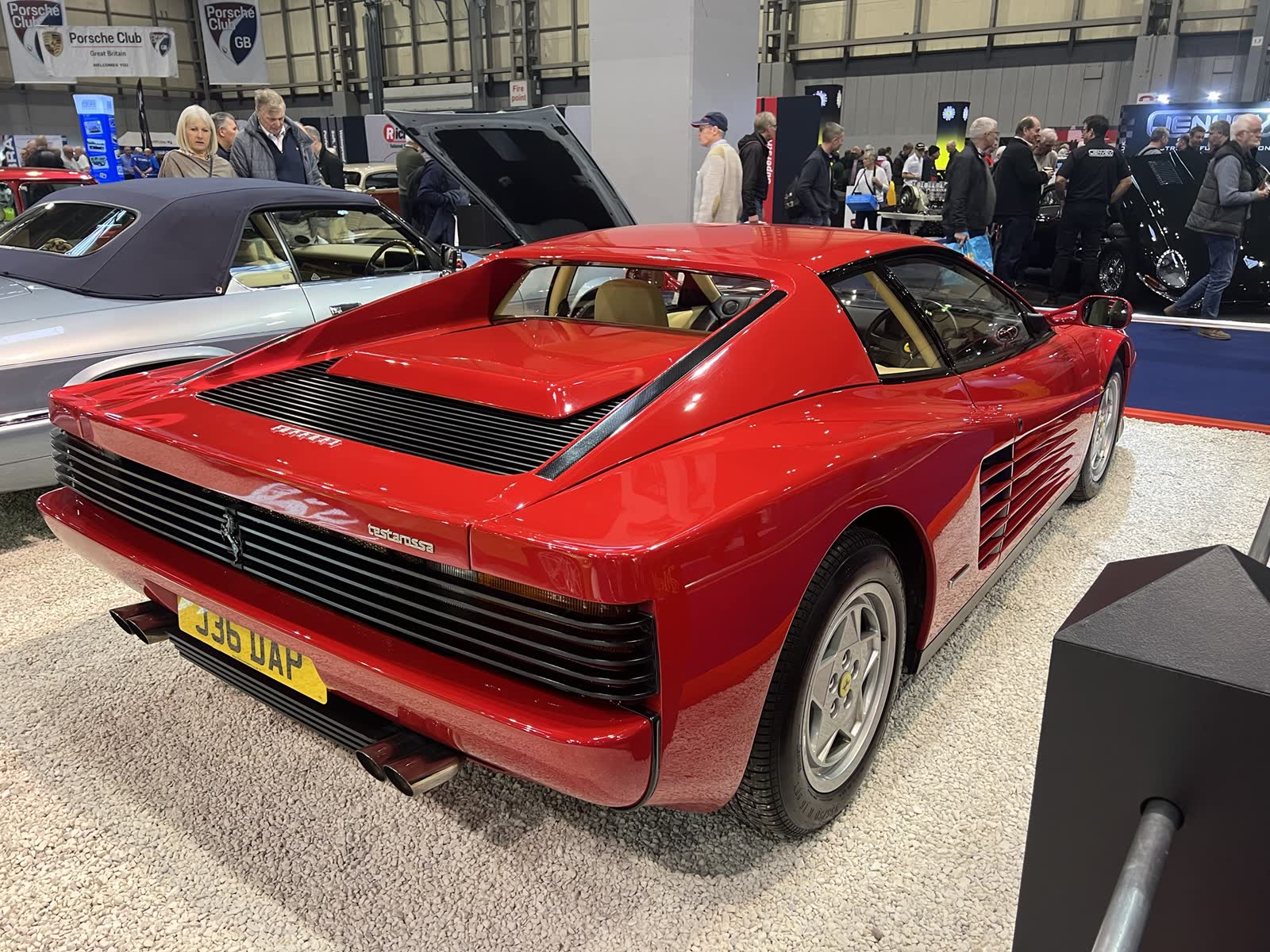 A real Testarossa, which I photographed at a car show: roof very much attached
Sega didn’t actually ask Ferrari’s permission. When Ferrari complained, Sega paid a settlement to avoid going to court, and the later OutRun games had a proper licence.
Ten months, a small team and a lot of late nights
OutRun was made by a team of four programmers, five graphic designers and a sound creator in ten months, with Suzuki doing much of the programming and planning himself and working extra hours to get it finished. It ran on Sega’s new OutRun board, using the “Super Scaler” sprite-scaling technique Suzuki had used a year earlier on Hang-On to give the impression of a 3D road.
The route was the clever part. Each stage ends at a fork in the road, so you choose left or right and carve your own path through five stages to one of five different destinations, each with its own ending. One of them has the Ferrari breaking down, which is a very Italian outcome.
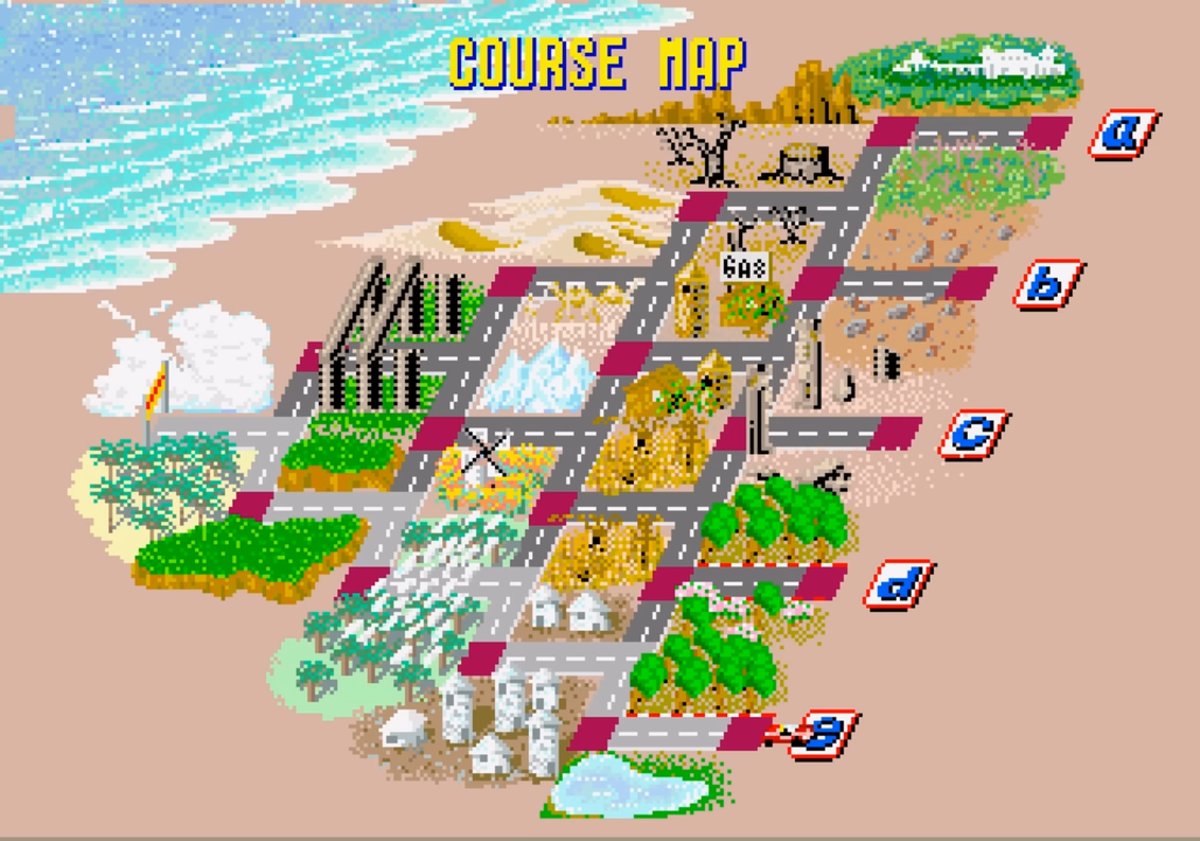 The course map: start on the left, take a fork at the end of each stage, and finish at one of five destinations, A to E, on the right
The radio
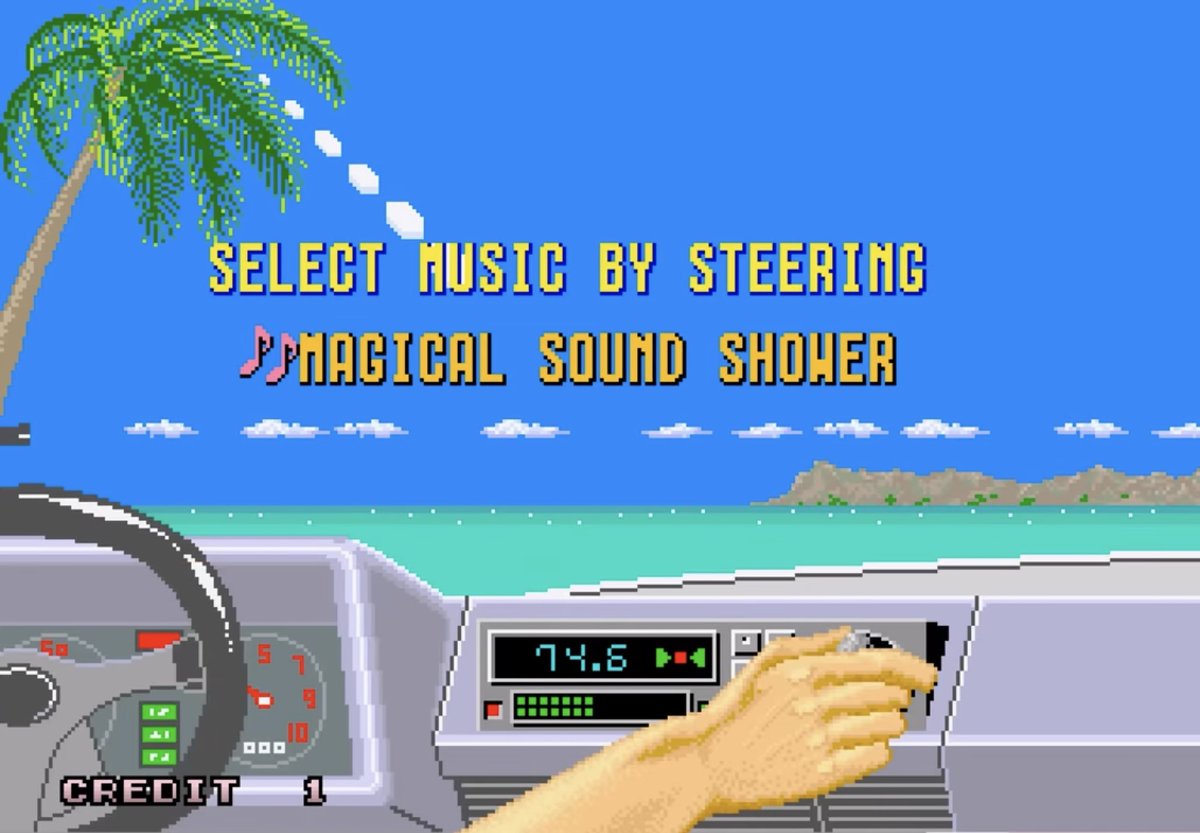
Then there was the music. Before you set off you tune the car radio to one of three stations, each playing a different track by Hiroshi Kawaguchi: Passing Breeze, Splash Wave or Magical Sound Shower. Kawaguchi had also scored Hang-On, and he made the radio a central part of the fun rather than a background noise. Choosing your own soundtrack in an arcade game was a novel idea at the time, and most people of a certain age can hum at least one of them.
The cabinets
Sega built four OutRun cabinets, all with a steering wheel, gearstick and pedals. Two were uprights, the larger with force feedback in the wheel, and two were sit-down models shaped like the Ferrari itself, which used a motor to turn and shake the whole cabinet in time with the action. The moving sit-down was the one everyone queued for, and the one that made the home versions look a bit sorry for themselves.
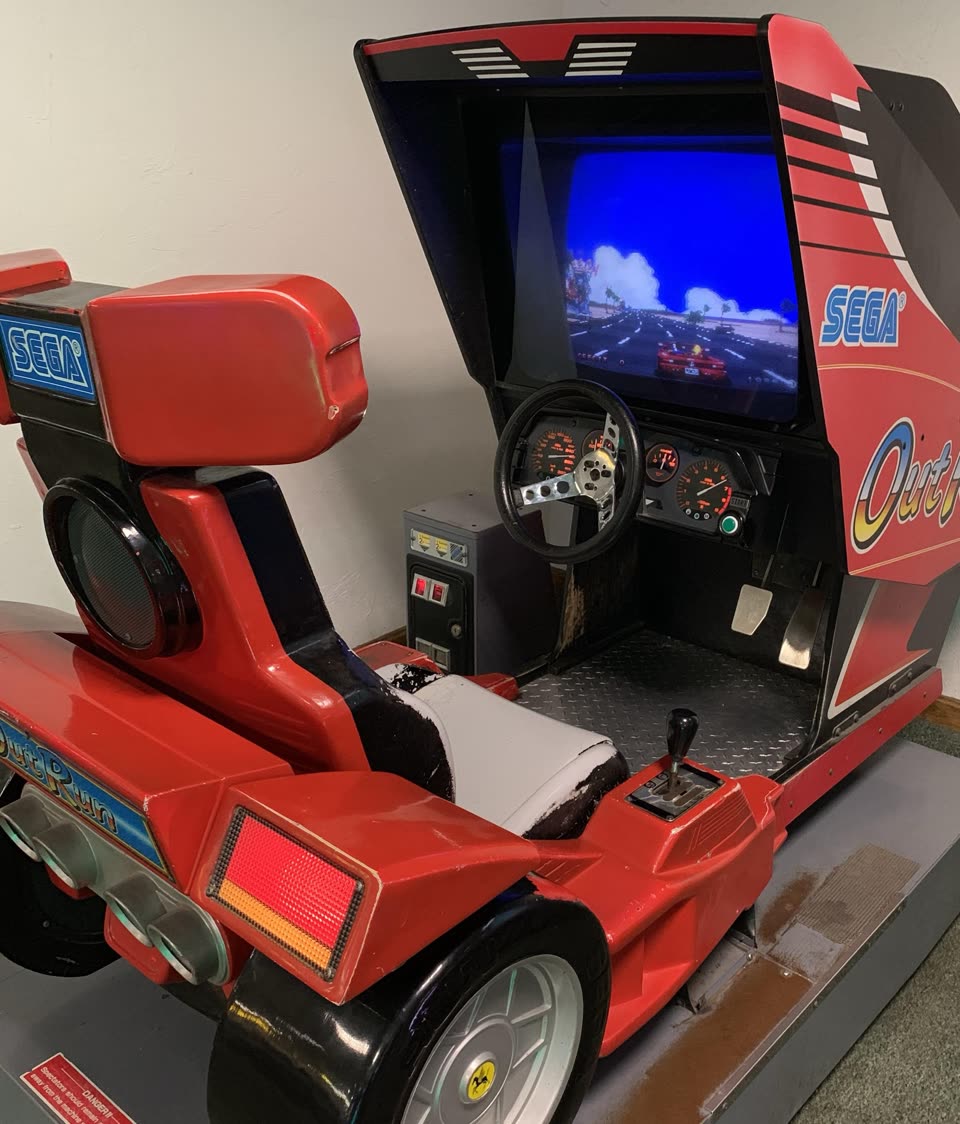
The sit-down OutRun, where the whole car turns and shakes with you
What They Said at the Time
OutRun went straight to the top. In Japan it led the Game Machine chart for upright and cockpit cabinets in November 1986 and became the country’s highest-grossing arcade game of 1987. It did the same in the United States, and in Britain it topped the London arcade charts from February to June 1987 and finished as the top arcade game of the year. Sega sold 18,000 machines in its first months, earned more than $100 million from them, and by 1994 had sold around 30,000, making it Sega’s best-selling arcade cabinet of the 1980s.
The magazines were won over too. Commodore User gave the arcade game 9 out of 10:
“A great game for driving enthusiasts.”
Commodore User
Your Sinclair’s Peter Shaw went further:
“The most frighteningly fast road race game.”
Your Sinclair
It also won Game of the Year and Arcade Game of the Year at the 1987 Golden Joystick Awards.
OutRun at Home
US Gold’s conversions for the Spectrum, Commodore 64 and Amstrad arrived in December 1987 and sold more than 200,000 copies in their first two weeks, topping the Christmas chart. Whether they deserved to is another matter. Squeezing a hydraulic Ferrari into a 48K Spectrum was always going to involve some sacrifices, and CRASH’s reviewers made no secret of their disappointment. Your Sinclair gave the Spectrum version 8 out of 10, which looks generous now, especially as the screenshots it printed were rather better than the game people actually bought.
Sega’s own Master System version did better with the critics, and Computer & Video Games reckoned it had “all the thrill power of the arcade version”. Which says something about the home versions, but perhaps not as much as it says about the Master System. A Mega Drive version followed in 1991; for the best games on that console, see my Top 10 Mega Drive games.
My own experience of home OutRun began with a “borrowed” copy of the Spectrum version, which was frankly dreadful. It was simply asking too much of the hardware. The Commodore 64 version was slightly better, if only because it moved with some pace, and the Amiga version was colourful but felt like playing it through a letterbox.
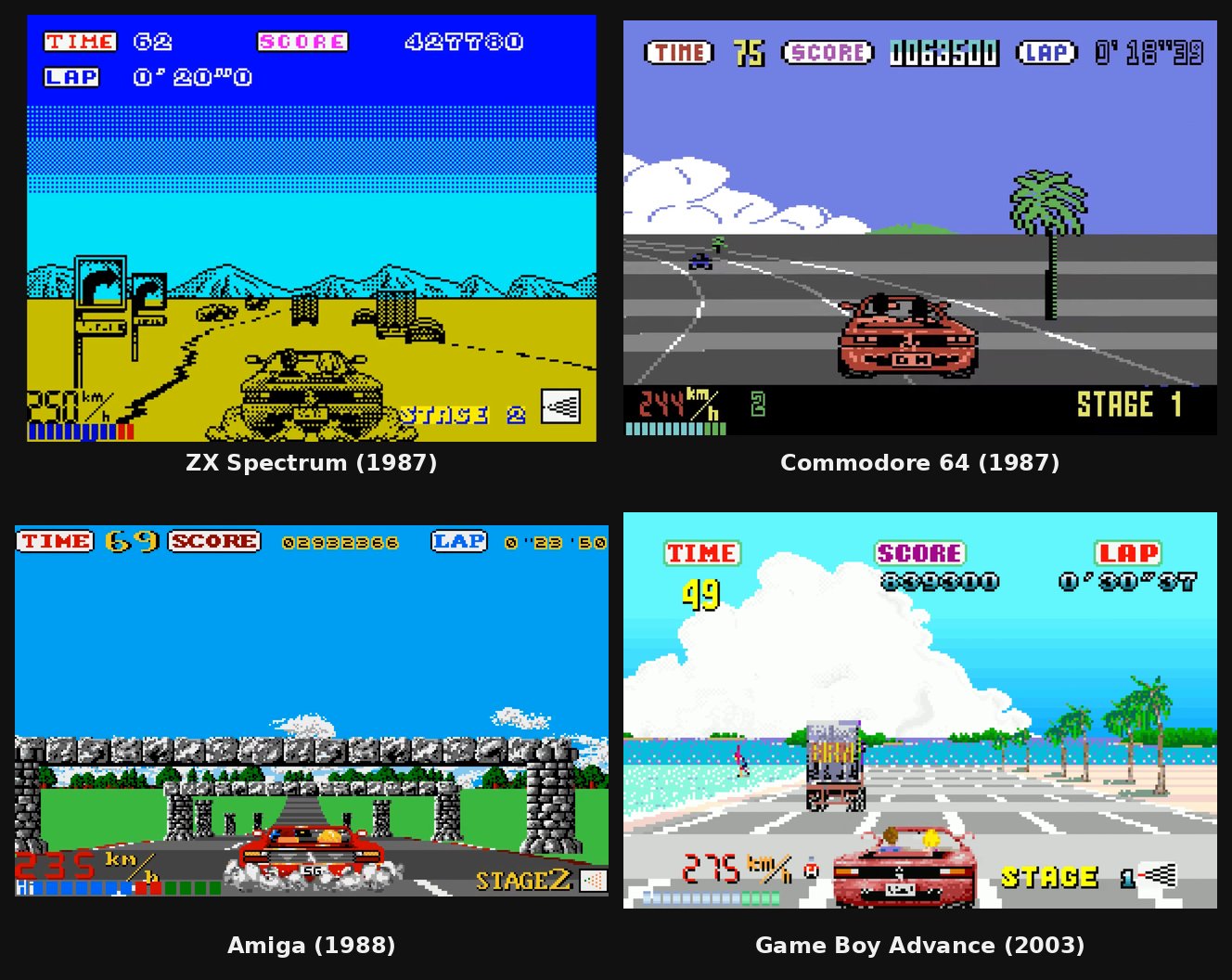 OutRun at home: the Spectrum, C64 and Amiga versions, and the Game Boy Advance version that finally got it right. The Saturn version looks just like the arcade, so I’ve spared it the line-up.
It wasn’t until the Sega Saturn that we got a version that was arcade perfect, and then a surprise one on the Game Boy Advance, as part of Sega Arcade Gallery in 2003, which was also spot-on. A Ferrari in your pocket, more or less.
In the Culture
OutRun’s biggest legacy outside games is probably musical. Its sunny, synthesiser-led soundtrack and its neon-and-palm-trees look gave their name to “outrun”, a style of synthwave music, and French producer Kavinsky called his 2013 album OutRun. Not many arcade games have had a music genre named after them.
What Players Remember
Plenty of people remember exactly where they first played it. A GamesRadar writer recalled that one of their earliest gaming memories was “playing OutRun at the now sadly-closed Sedgemoor Splash leisure pool in Bridgwater, Somerset”, and a reader of The Register remembered finding “a Outrun sit down cab (non moving version) in an arcade in Ilfracombe”. Seaside arcades and leisure centres, in other words, which sounds about right.
My OutRun Story
Mine was a seaside arcade too. I first played OutRun in its sit-down form, in one of the arcades on Southend sea front. I’d been softened up the year before by Space Harrier, another Yu Suzuki creation, which also came in a cabinet that moved you about as you played. Between the two of them, Suzuki had worked out that the most exciting thing an arcade game could do was involve your whole body, and OutRun added a Ferrari and a radio.
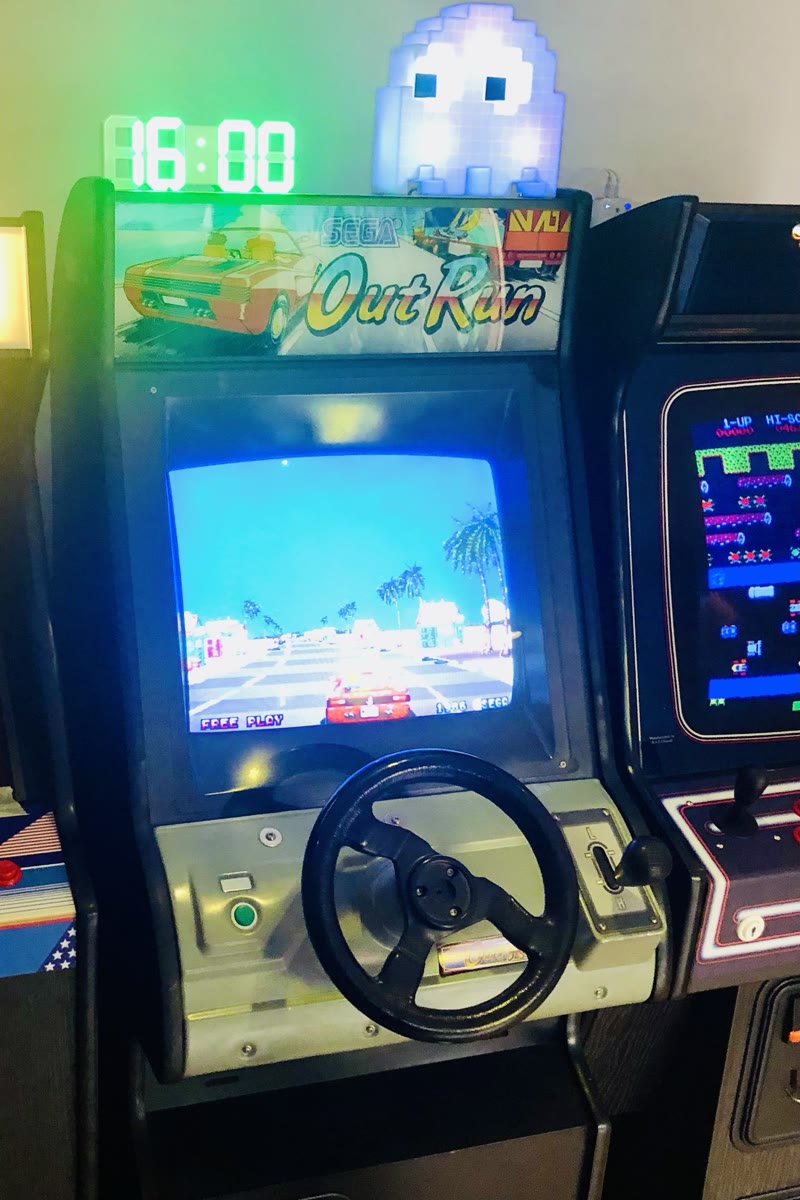
These days I have an OutRun of my own, standing in a line of cabinets alongside Star Wars, Track & Field and Battlezone. It’s the “mini” upright, which does without the big marquee on top of the full-size cabinet and has Sega logos down the sides instead of the classic OutRun side art. Where it matters, though, it’s all there: the steering wheel, the two-position gearstick, and the accelerator and brake pedals, all in working order.
It came from a company in London that had been using it in their staff canteen, which must have made for some competitive lunch breaks, and it was still fully working when it was delivered to me in Essex. Cosmetically it’s in fairly good condition. The graphics on the glass are missing, and so is the badge from the middle of the steering wheel, which is common on these cabinets. Sega couldn’t use the real Ferrari badge, of course, so the cabinets made do with Ferrari-esque ones, and they were small, shiny and very easy to prise off, so a good number of them left the arcades in people’s pockets.
As for the radio, my favourite of the three is obviously Magical Sound Shower. I’m not sure there’s ever been any real contest.
Playing OutRun Today
An original cabinet is the real thing, if you have the space and the patience for a steering wheel that needs a firm hand. The clip at the top of the page is from arcade emulation, which is how I record the footage for the site.
The best official versions are Sega Ages OutRun on the Nintendo Switch (2019) and 3D OutRun for the Nintendo 3DS (2015), both by M2. If you have older kit, the Saturn version and the Game Boy Advance’s Sega Arcade Gallery are both arcade-accurate too. The 3DS eShop has closed, so that one is now only available if you already bought it. Arcade1Up also made a sit-down OutRun cabinet for the home, which Suzuki himself said brought back a lot of memories.
Whichever way you play, tune the radio before you set off. It’s half the game.
The Legacy of OutRun
Sega followed it with Turbo OutRun in 1989, and OutRun 2 in 2003 finally got Ferrari’s official blessing, along with a whole showroom of its cars. Suzuki went on to make Shenmue, which took the idea of building a game out of real places and real research about as far as it would go.
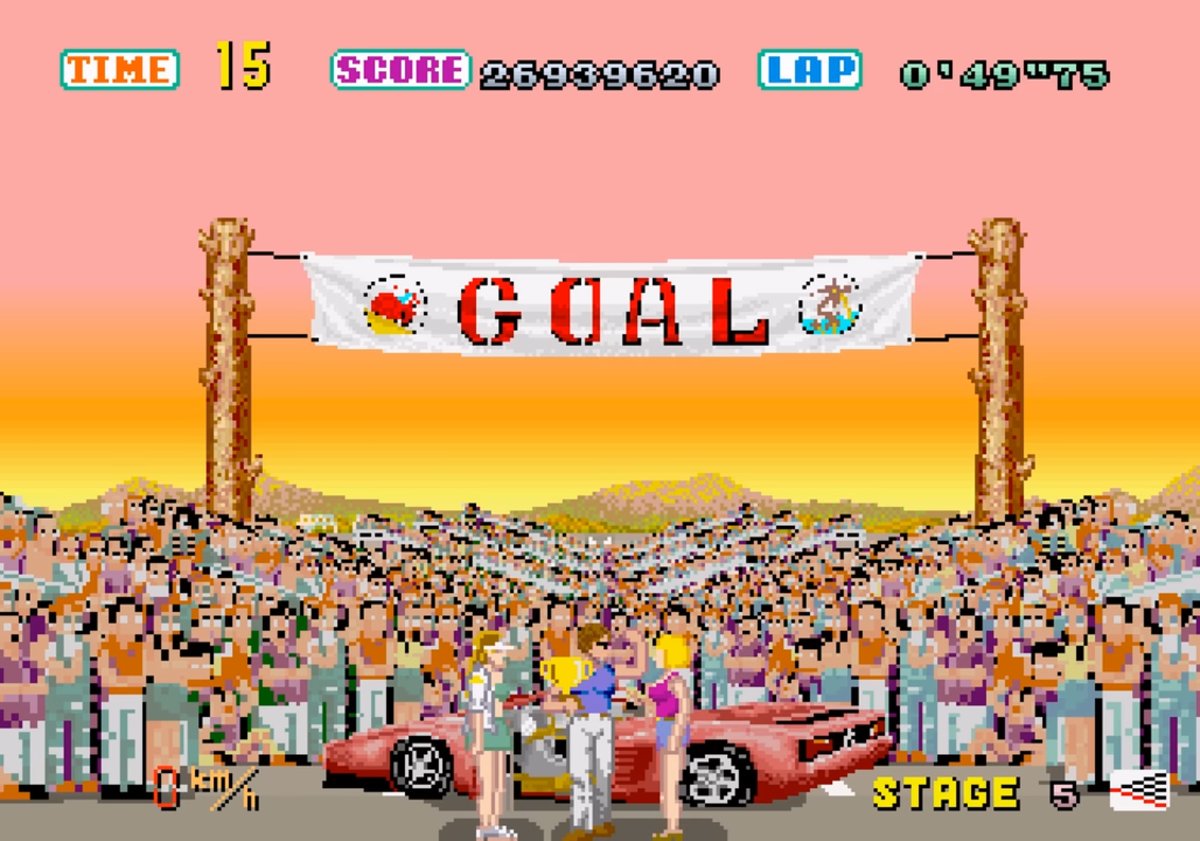 The trophy ending: one of the five, and one of the nicer ones.
But the original is the one people remember, and I think that’s because it’s the only racing game that feels like a holiday. Suzuki went on a road trip and came back with a game that sends you on one, and 40 years later the Testarossa still hasn’t run out of road. The clock, admittedly, still runs out of time.
Frequently Asked Questions
Who made OutRun?
OutRun was directed by Yu Suzuki at Sega, with music by Hiroshi Kawaguchi. It was released in Japan in September 1986, North America in November 1986 and Europe in December 1986.
What car do you drive in OutRun?
A red Ferrari Testarossa convertible, which is a car Ferrari never actually sold: the real Testarossa only came as a coupé, apart from a one-off open-top car made for Gianni Agnelli. Sega didn’t have a licence from Ferrari for the original game, and paid a settlement after Ferrari complained.
How many routes and endings does OutRun have?
Each of the five stages ends at a fork in the road, and the choices lead to one of five destinations, each with its own ending.
What are the songs in OutRun?
You choose one of three radio stations before you start: Passing Breeze, Splash Wave or Magical Sound Shower, all by Hiroshi Kawaguchi. A fourth track, Last Wave, plays on the high-score screen.
Where can I play OutRun today?
Sega Ages OutRun on the Nintendo Switch is the easiest official way. There’s also 3D OutRun on the 3DS (no longer on sale), the Arcade1Up home cabinet, arcade emulation, or an original cabinet if you have the room.
Sources
Quotes from elsewhere, for anyone who wants to read more:
- Commodore User, Your Sinclair and Computer & Video Games reviews, as quoted in Out Run on Wikipedia
- Classic game appreciation section: OutRun, GamesRadar
- Sega’s Out Run: Even better than the wheel thing and its reader comments, The Register
- Interview with Yu Suzuki: Arcade1Up OutRun, translated by Phantom River Stone
More like this
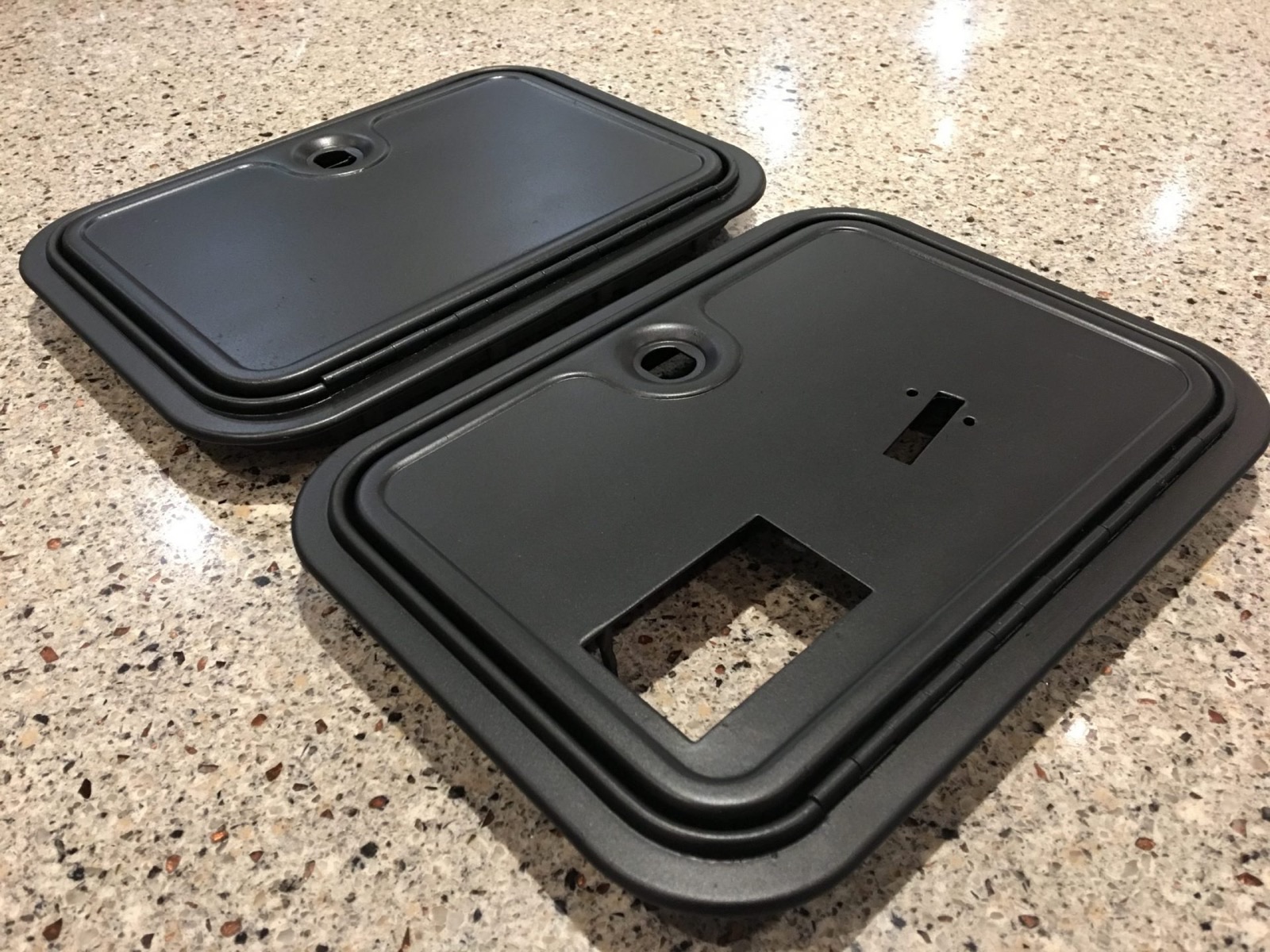
BAS Arcade Cabinet Restoration - Part 2
Part 2 of my BAS Arcade Cabinet restoration, where I renovate the coin doors, marquee and metalwork of this iconic British JAMMA machine

The Arcade Shed Build - Part 1
Follow the build of an arcade shed at the bottom of my garden, using a standard wooden shed with extra insulation for use all year round.

Arcade Cabinet Restoration
Follow my restoration of this old BAS Arcade cabinet. In the first update I tackle the monitor, the woodwork, the control panel and controls
Comments