Asteroids on the Atari VCS/2600
By RolyRetro · · Updated · Atari 2600
Atari released Asteroids in the arcades in November 1979 and it became their biggest-selling coin-op of all time, with more than 70,000 cabinets sold in the US alone. Up there with Space Invaders, it’s one of the most recognised video games in history.
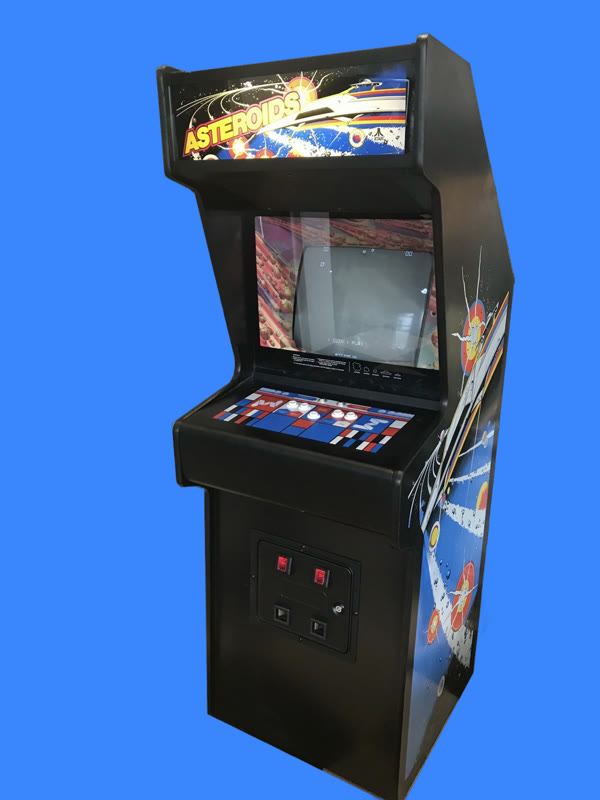

The original Asteroids upright, and the arcade game’s vector graphics
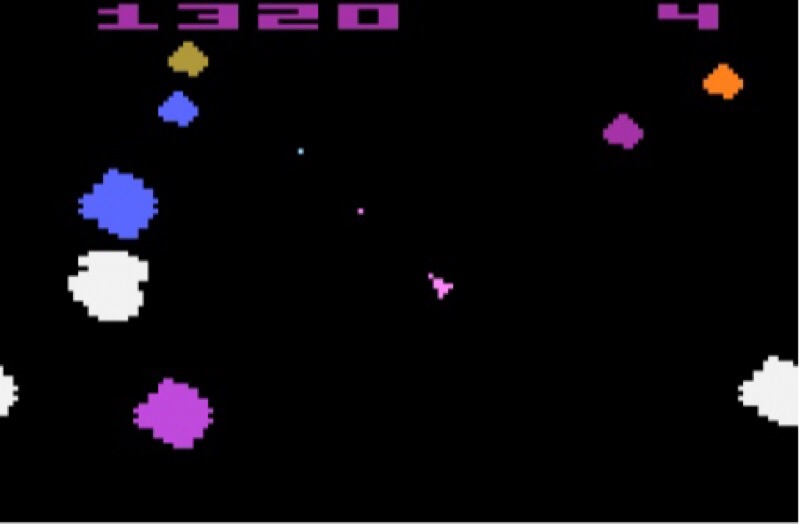
It was only natural that Atari’s #1 property was ported to their home system, the VCS (later renamed the 2600). Featuring solid raster graphics rather than crisp vectors, the game somehow retained the spirit of the original if not the look. This feeling was enhanced by the sound, which retained the menacing 2 notes which, Jaws-like, sped up as the pace of the game increased.
The arcade game felt like you were stranded in a cold and empty space, but the Atari VCS version, with its bright colours, was altogether more jolly.
The People Behind the 2600 Version
The arcade game was Lyle Rains’s idea (“why don’t we have a game where you shoot the rocks and blow them up?”) and Ed Logg’s design, but the VCS conversion went to Brad Stewart, who already had form with Atari’s coin-op hits: he’d written the VCS version of Breakout in 1978, which sold well over a million and a half copies. Fellow programmer Bob Smith also worked on Asteroids.
Interviewed in 2001, Stewart was matter-of-fact about the bank switching that made it possible, crediting the hardware to Carl Nielsen’s group at Atari: “Asteroids needed the 8K, though.” He also cleared up a small mystery for collectors. Some copies of the cartridge open with a “© 1981 Atari” title screen and some don’t, and he hadn’t written it: “There was no copyright screen in my version.”
As with every Atari game of the time, his name was nowhere on the box. Atari didn’t credit its programmers or pay them royalties, which is why four of them had already left to form Activision in 1979. Rob Fulop, who did the VCS Missile Command, famously got a voucher for a free turkey as his Christmas bonus. Bob Smith left in 1981 to co-found Imagic, where he wrote Star Voyager, Riddle of the Sphinx and Dragonfire, and Stewart followed, writing Fire Fighter for Imagic in 1982.
Meanwhile the cartridge they’d made kept selling. Atari’s own figures put it at 3,832,886 copies, the fifth best-selling 2600 game behind Pac-Man, Space Invaders, Donkey Kong and Pitfall!, and it was still shifting a few thousand copies a year as late as 1990.
Squeezing Asteroids into a VCS
The trouble was that the arcade game drew its rocks as sharp white outlines on a vector monitor, and the VCS couldn’t draw a line to save its life. It had 128 bytes of RAM, a handful of sprites and had to build every picture a line at a time as the TV drew it. So Stewart didn’t try to copy the arcade screen; he rebuilt the game out of chunky coloured blobs.
Solid, multicoloured rocks on the VCS, with that thumping heartbeat
Even then it wouldn’t fit. The VCS could only see 4K of a cartridge at a time, so the cartridge was given a trick called bank switching, swapping between two 4K halves of an 8K chip, and Asteroids became the first VCS game to use it. Plenty of later cartridges followed suit. To get enough rocks on screen, the game also draws them on alternate frames, which is why 2600 Asteroids flickers like a dodgy fluorescent tube. Your eyes stop noticing after a few minutes (or you get a headache, one or the other).
It came out in the summer of 1981 and was one of the reasons a lot of people bought a VCS in the first place.
66 Games in One
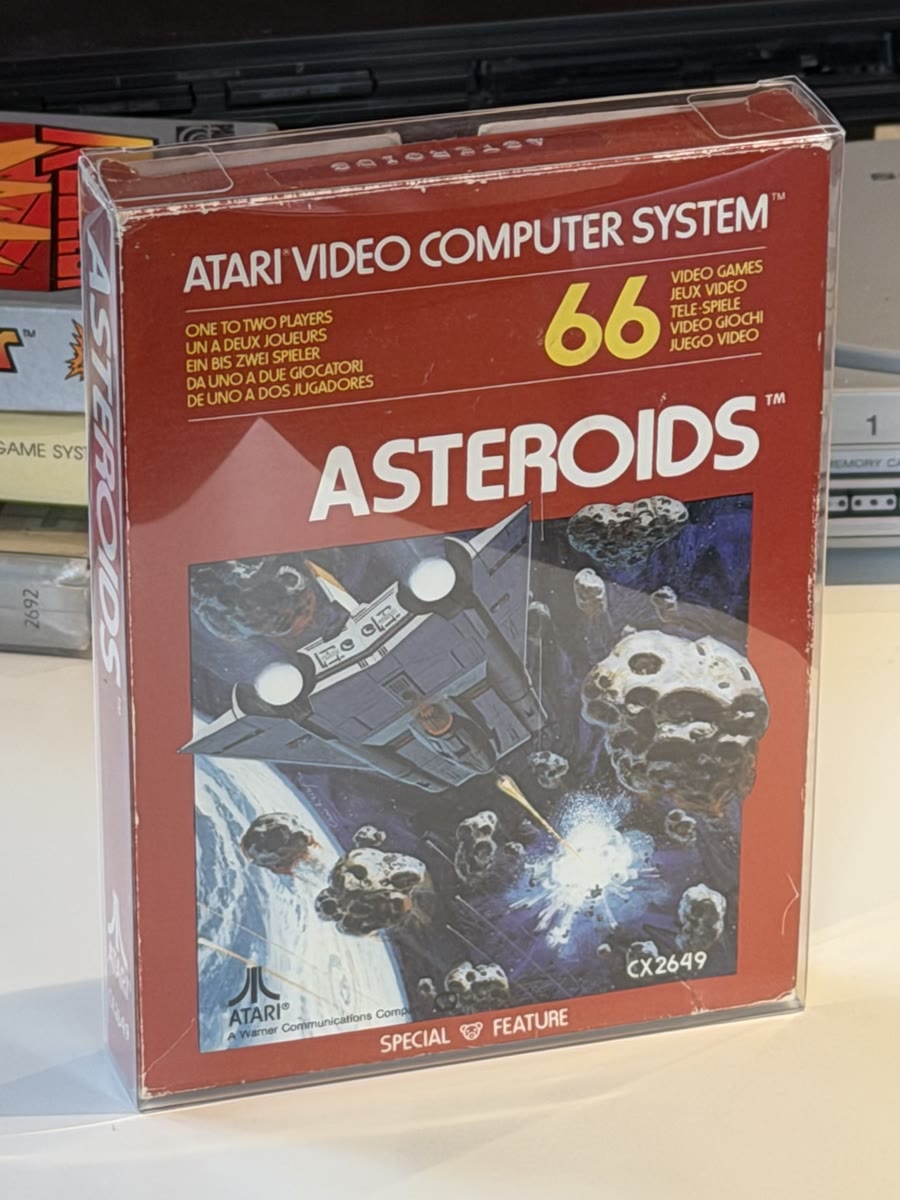
To add a bit of longevity (if this were needed, when all you had to have was a strong forearm and a love of button mashing) there were 66 variations of the game, including various combinations of warps, shields and enemy ships. Atari liked a big number on the box, and they weren’t going to waste this one.
In practice the game select switch steps through your escape option (hyperspace, shields, flip, or nothing at all), whether the UFOs turn up, how often you get an extra ship and how fast the rocks move. Games 33 to 66 are slower versions for younger players, which is what the teddy bear “Special Feature” badge at the bottom of the box is telling you.
The painting on the front, a spaceship firing into a rock field with the Earth below, is a fine example of Atari promising rather more than the cartridge could deliver. I’ve written more about that in my piece on Atari 2600 box art.
What They Said at the Time
The VCS cartridge was a hit straight away. In the very first issue of Electronic Games magazine, in late 1981, Asteroids was number one in its chart of the most popular videogame cartridges, ahead of Missile Command and Adventure. The following year Video Games Player gave the VCS version a B+ in its report card, and Electronic Fun with Computers & Games gave it an A, which seems about right for a game that had no business working at all.
Asteroids Facts (Corrected)
When I first wrote this post in 2011 I included some facts I found on the internet, so they must be true. Fifteen years on, I’ve checked them:
-
Asteroids was the first Atari VCS game to use “bank switching” to double its ROM space from 4K to 8K. This one was true (and now I know what it means; see above).
-
I said a homebrew version came out in 1989 with wire-frame “vector” graphics, where the asteroids were the same but hollow. The hollow rocks are real but the date isn’t: they’re hacks of the original cartridge made by fans in the 2000s, such as Thomas Jentzsch’s Sadistroids and the “Arcade Asteroids” hack, which turned up on the Atari Flashback 2 plug-and-play console.
-
In July 2009 Universal Pictures did announce plans for an Asteroids film, with Roland Emmerich lined up to direct. He passed, the script went through several rewrites and nothing has reached a cinema yet. In July 2026 Atari signed a deal with Universal to turn ten of its classic games, Asteroids among them, into films, so watch this space (which will presumably be full of rocks).
-
I said Asteroids came out on every Atari home system and computer except the 5200, which only made it to prototype stage. Not quite. The 5200 version really was finished and never released, but the game also skipped the Jaguar (a demo was shown, and that was that). It did reach the Atari 8-bit computers in 1981, the 7800 when that console launched in 1986, and the Lynx as half of Super Asteroids & Missile Command.
My Asteroids
A great gaming memory from my early teens. I first played it on a friend’s 2600: I’d go round to his house an hour early before our judo lesson, and it was a toss-up between watching Battlestar Galactica or playing Asteroids. Asteroids usually won, which probably says more about Battlestar Galactica than it does about Asteroids.
I remember thinking at the time that the graphics were more colourful than the arcade version, if a little blocky, but the game actually played in a very similar way. That’s the clever bit, really: Atari threw away the look and kept the feel.
It was also the first game I bought when I got hold of an old 2600 on eBay in 2010, and it’s number 1 in my top 10 Atari 2600 games. Like a lot of Atari fans I’ve ended up with several loose copies of the cartridge (it’s hard not to, given how many Atari made), but I wanted a mint boxed one for my collection, and the copy in the photo is one I came across only recently.
If you want to see what happened to the 2600 itself, I wrote about restoring an old Atari 2600, and Combat is where a lot of us started on the machine.
Playing Asteroids on the 2600 Today
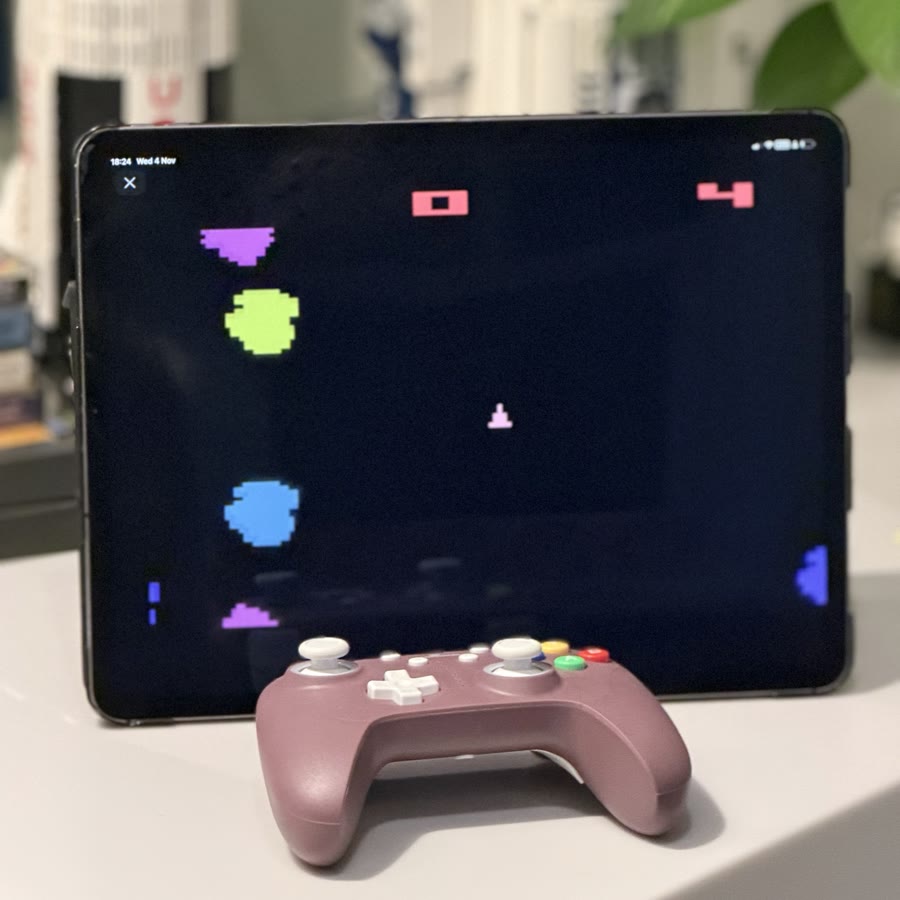
Original cartridges are among the most common 2600 games around, because Atari made millions of them, so a loose copy costs very little and a boxed one isn’t much more. It plays fine on any 2600 or 7800, which runs 2600 cartridges.
If you’d rather not dig out the console, the 2600 version is on the Atari Flashback plug-and-play machines, the Evercade Atari Collection cartridges and Atari 50: The Anniversary Celebration (2022), which also has the arcade original so you can compare the two.
Or you can do what I do and run it in RetroArch on the iPad, with an Anbernic RG P01 wireless controller. It’s a long way from a woodgrain VCS and a joystick that clicks, but the rocks are just as blocky and the heartbeat is just as relentless, and I don’t have to get up to blow on the cartridge.
For the arcade side of Atari’s vector games, see my reviews of Battlezone and Tempest.
Frequently Asked Questions
When was Asteroids released on the Atari 2600?
Atari released Asteroids for the VCS (2600) in 1981, the same year as the Atari 8-bit computer version. The arcade original came out in November 1979.
Who programmed Asteroids on the Atari 2600?
Brad Stewart, who had written the VCS version of Breakout, with Bob Smith. The arcade game was conceived by Lyle Rains and designed and programmed by Ed Logg.
How many game variations does Atari 2600 Asteroids have?
- Games 1 to 32 mix the escape option (hyperspace, shields, flip or none), UFOs, extra ships and rock speed, and games 33 to 66 are slower versions for children.
Why does Asteroids flicker on the Atari 2600?
The 2600 can only show a few moving objects on each line, so the game draws the rocks on alternate frames. It’s the price of getting a screen full of asteroids out of a 1977 console.
Was Asteroids the first Atari 2600 game to use bank switching?
Yes. It was too big for a 4K cartridge, so Atari used bank switching to give it 8K, the first VCS game to do so.
Sources
- Electronic Games, first issue, 1981, Internet Archive (“Most Popular Videogame Cartridges” chart)
- Brad Stewart, interviewed by Scott Stilphen (2001), The Atari Compendium
- Cartridge sales: List of best-selling Atari 2600 video games, Wikipedia (from Atari Corp.’s cartridge sales records)
- Review ratings, development details and sales figures: Asteroids (video game), Wikipedia
More like this
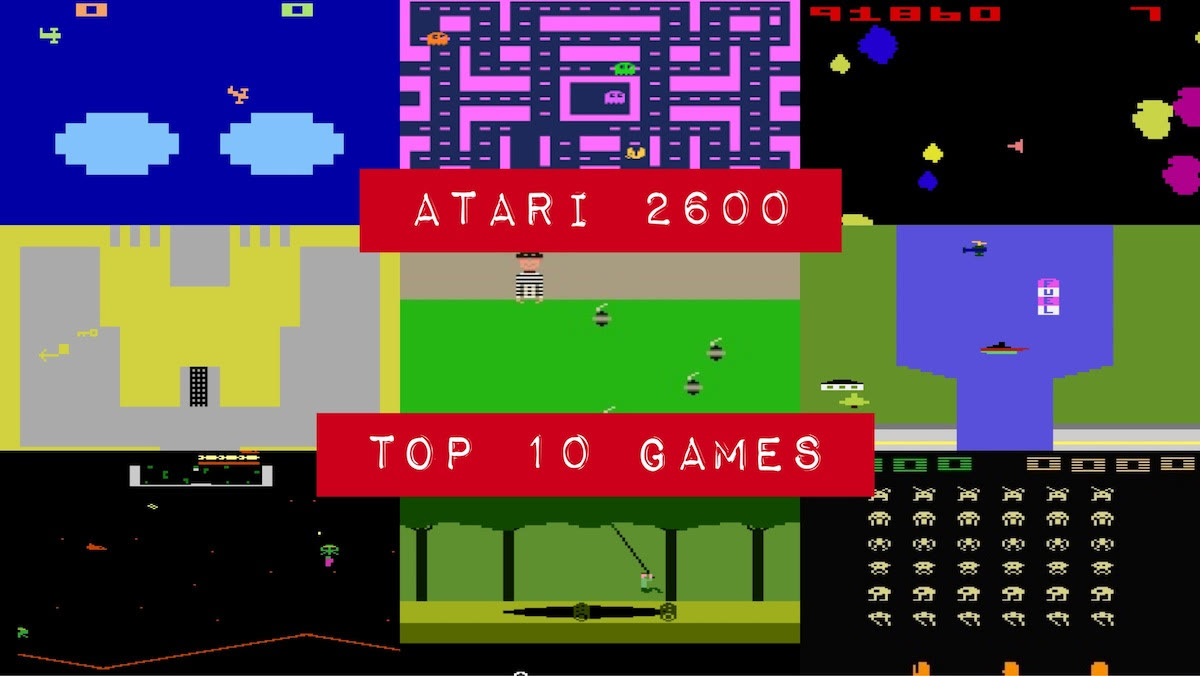
Top 10 Atari 2600 Games
The best classic Atari games, from iconic Asteroids and Pitfall to Adventure and River Raid: my top 10 Atari 2600 games, the best of the rest and how to play them today.

Atari 2600 Box Art - The Best Video Game Media
The Atari 2600 had some of the best videogame box art, from a time when games required imagination to bring blocky pixels to life

Star Wars: The Empire Strikes Back for the Atari 2600
Star Wars: The Empire Strikes Back was launched in 1982 on the Atari 2600. Pilot your Snow Speeder and take down huge Imperial walkers!
Comments